Blog / Tools
What Is HideLink on MyLead and How Does It Work?
This article is updated regularly
Last update:
27 March 2025
HideLink is MyLead's free link cloaking system that protects affiliate campaigns from bots and bypasses bans on social media platforms such as Facebook, Instagram and Google. It works on a safe page that filters incoming traffic: real users reach the advertiser's offer, while bots remain behind. This mechanism extends the lifespan of promoted affiliate links.
In this article you'll learn how the HideLink system filters bots, what its main advantages are, and how to create and configure it on your own WordPress site step by step.
What you'll learn from this article:
how the HideLink safe page separates real users from bots,
why HideLink helps you bypass bans on Facebook, Instagram and Google,
how to apply for HideLink and generate your PHP cloaker code,
how to install HideLink on WordPress with a free plugin or theme files.
What is HideLink on MyLead?
HideLink is a link cloaking tool built into the MyLead platform that hides the real affiliate destination behind a safe page. It separates genuine visitors from automated bots, sending real users to the advertiser while keeping crawlers on a neutral page. Publishers find it in the Tools section of the publisher panel.
HideLink launched as a native MyLead feature, so you don't need any external cloaking service. You manage it from the same dashboard as your campaigns, next to the other utilities in the MyLead Tools section. Access is granted after you submit a short application describing how you plan to use the system.
Why do you need HideLink to promote affiliate links?
Affiliate links often get blocked on social media because platform bots flag content considered inappropriate, such as gambling or adult offers. HideLink solves this by showing moderation bots a clean safe page while redirecting real users to the offer. This bypasses persistent bans and keeps campaigns on Facebook, Instagram and Google running longer.
Social platforms enforce community rules through automated systems that scan every promoted link. If your offer breaks a rule, the account or ad gets blocked — and the mistakes that get you banned on Facebook are easy to trigger by accident. With cloaking the bot only sees your compliant page, so the risk drops sharply. The same logic applies when you cloak a MyLead offer on Facebook ads.
How does the HideLink system work?
The HideLink system relies on a safe page — the publisher's own landing page that every visitor reaches first. It analyzes each visitor by IP address and user-agent against an extensive bot database. Real users are redirected to the advertiser's website, while recognized bots stay on the safe page and never touch the affiliate link.
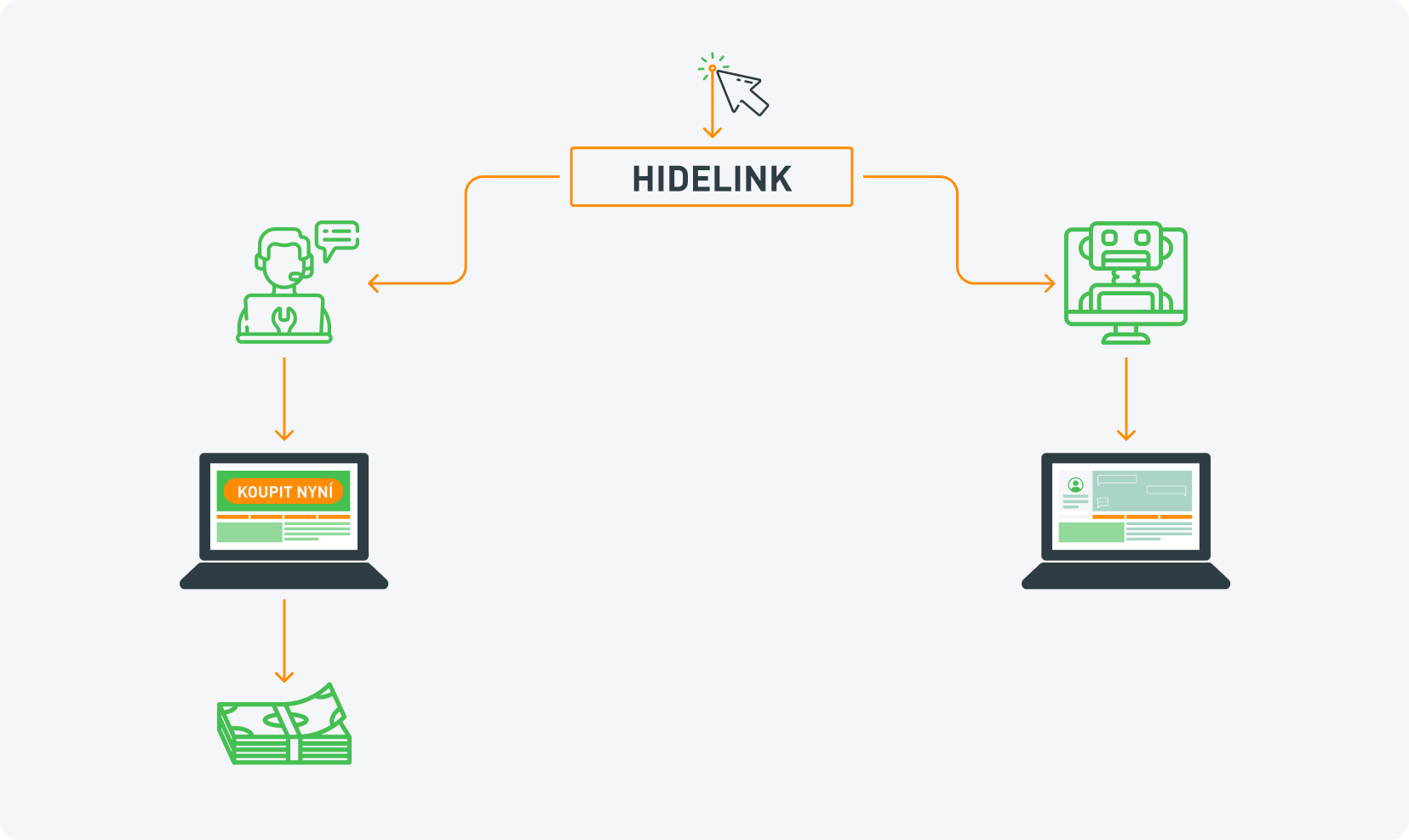
If the IP or user-agent matches a bot template from Facebook, Google or another listed portal, redirection stops and the bot is left on the safe page domain. HideLink also has automatic recognition: even values absent from the database can be flagged, much like a digital fingerprint identifies a visitor.
To run HideLink you need your own domain and hosting, because the safe page lives on your server. Treat it like a real landing page optimized for SEO — a credible design keeps moderators from getting suspicious.
What are the advantages of HideLink?
HideLink delivers three core advantages for affiliate publishers: protection against bots and fraud, lower costs, and higher efficiency through automation. By filtering out fake traffic it raises the share of real visitors who can convert, while removing the need to pay for separate cloaking software. The result is cleaner data and better campaign returns.

Dealing with bots — built-in fraud protection spots suspicious behavior in real time; eliminating bot traffic increases your chances of conversion.
Saving money — you get everything free, with no external tools, and you cut paid advertising spend because bots no longer count as artificial impressions.
Work automation — publishers using HideLinks achieve 30% higher investment growth on average, turning manual protection into a hands-off process.
How do you create a HideLink step by step?
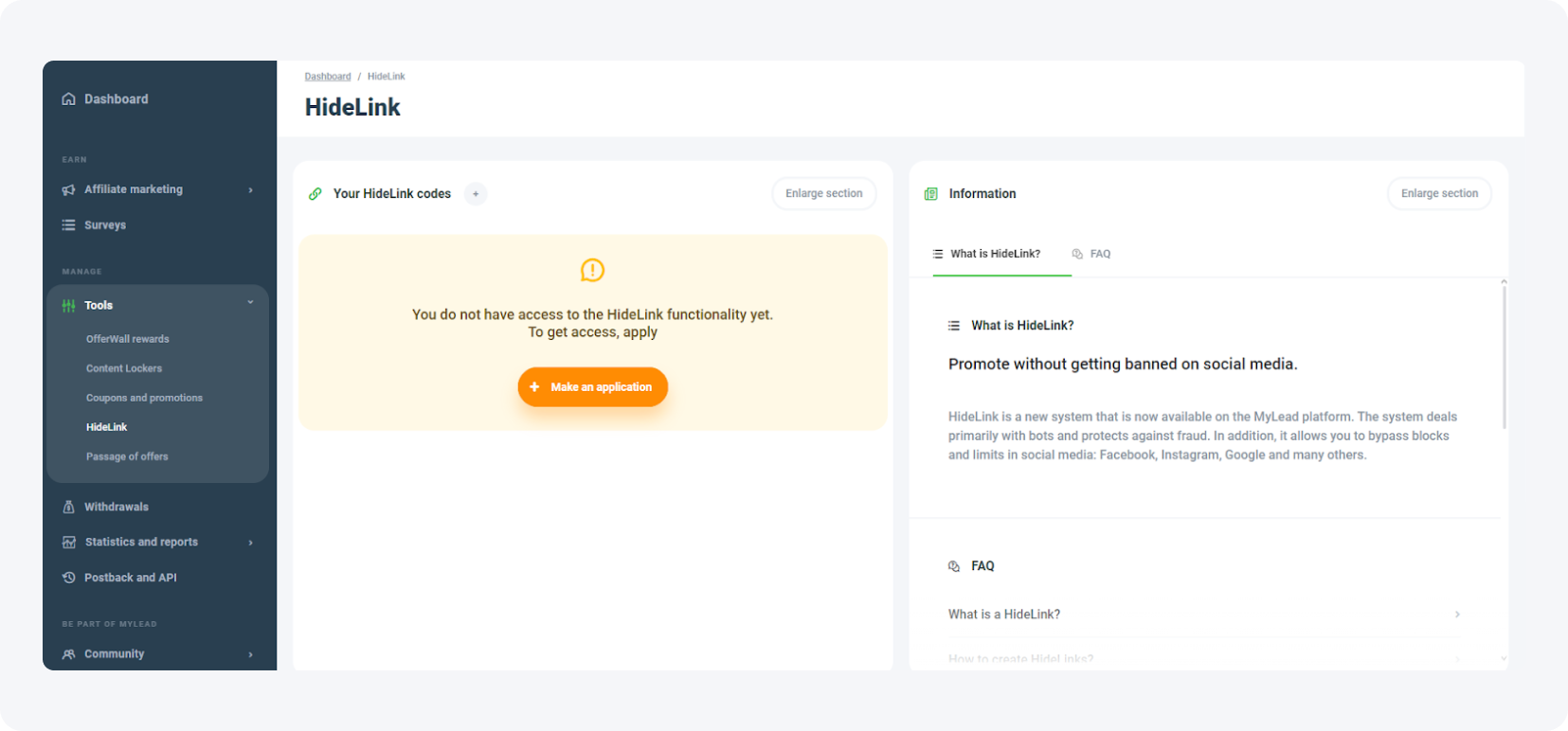
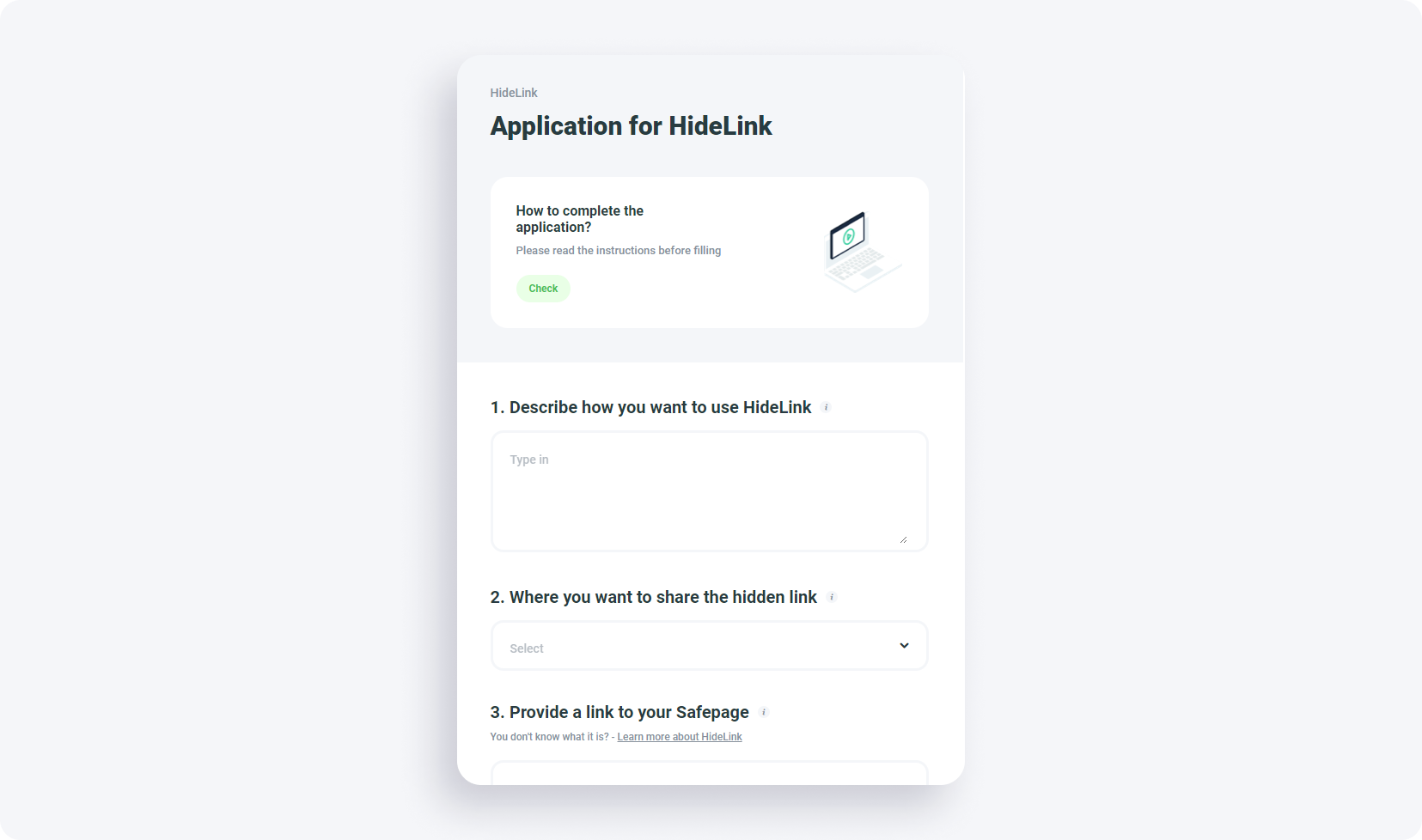
Creating a HideLink is a short process inside the MyLead publisher panel, available in the Tools section under "HideLink". It starts with a one-time application that describes the intended use, the sharing platform, the safe page URL and the campaign. Once MyLead approves the request, the panel generates a ready-to-use PHP cloaker code.
Follow these steps inside your panel:
Log in to the MyLead publisher panel, open Tools → HideLink and click the orange "Make an application" button.
Describe how and where you want to use HideLink, paste your safe page link and pick the campaign, then submit the form.
After approval, MyLead generates the PHP code. Click the green button to copy it and paste it as high as possible on your safe page.
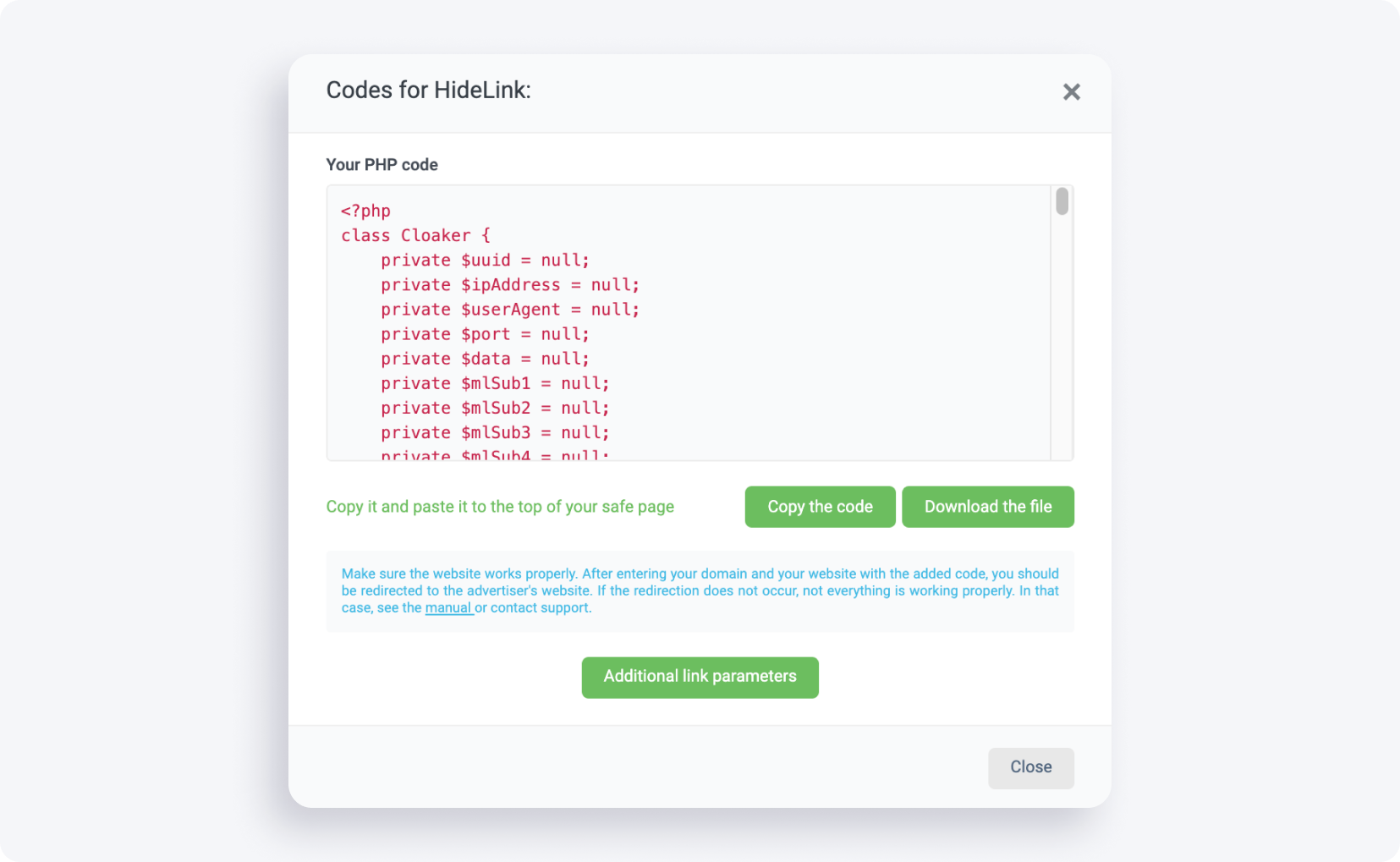
The PHP code requires a page in PHP format. If your page is HTML, change its extension to .php. Some cheap hosting blocks PHP execution with restrictive rules — if the format change doesn't help, contact MyLead support. For a full walkthrough, see how to complete a HideLink application. Log in and apply for HideLink in your MyLead panel today.
How do you add HideLink to WordPress correctly?
On WordPress, HideLink works by placing the generated PHP code on the pages that bots will visit. There are two reliable methods: installing a free PHP-snippet plugin, or editing the theme's PHP files directly. Both take only a few minutes and require WordPress version 3.0 or higher.
How to install HideLink with a free plugin?
The simplest method uses a free plugin that runs PHP through a shortcode. The plugin Insert PHP Code Snippet (also called XYZ PHP Code) adds a menu entry where a new snippet holds the HideLink code. Named "HideLinkMylead" and saved, it produces a shortcode that works on any page, post or category.



The saved cloaker has a reference in shortcode format, for example [xyz-ips snippet="HideLinkMylead"]. Paste it into any subpage, entry or category, and remember to switch the editor to text mode so the shortcode runs correctly.
How to add HideLink by editing theme files?
The second method edits the theme's PHP files directly, which suits publishers who want cloaking on every subpage at once. In WordPress, Appearance → Theme Editor opens the template files; the HideLink code goes into the file that renders the chosen pages, such as index.php, between its opening and closing tags.
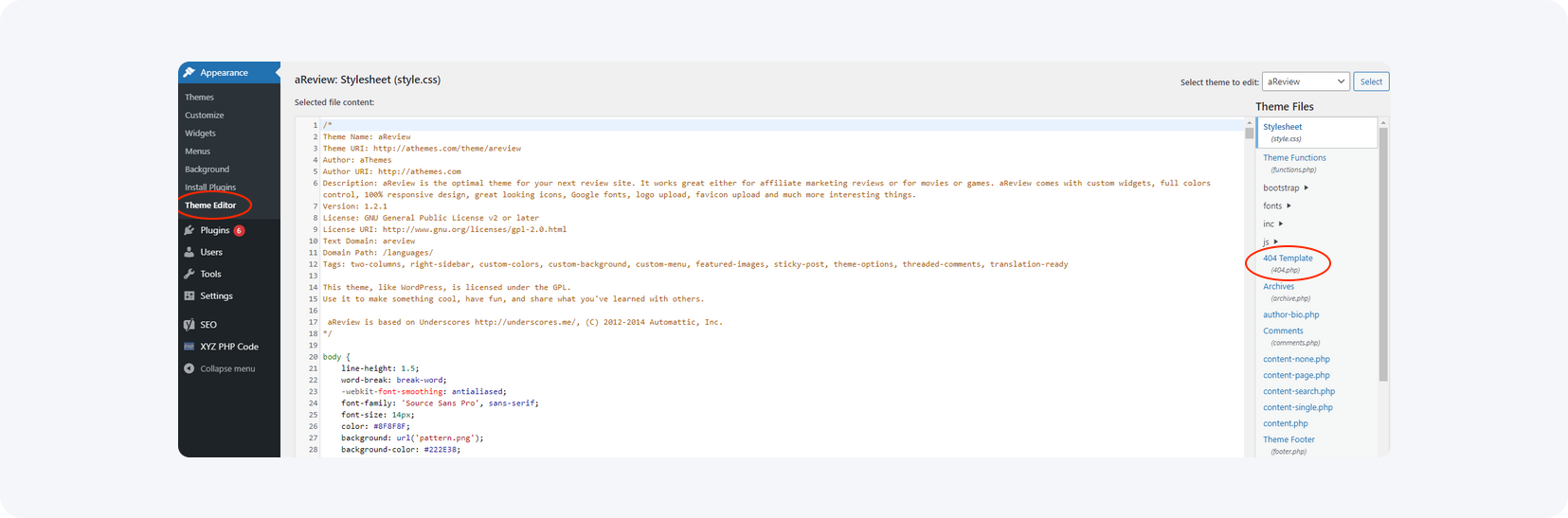


Select your theme from the list, open its PHP files and paste the HideLink content between the start and end of the code — the example above uses the index.php file of the aReview theme. Page builders like Elementor or Divi need the code in the theme file so cloaking covers all subpages, not just one.
What should you remember when using HideLink?
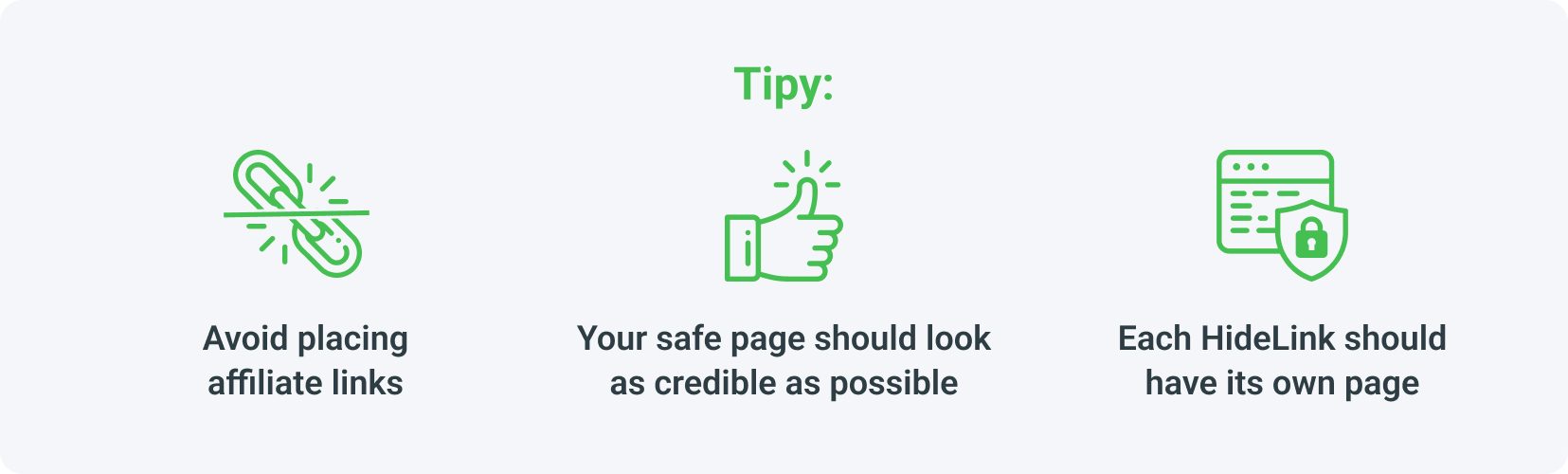
A few rules keep HideLinks effective. The safe page must look credible and contain no affiliate links, so moderators see a genuine site. Each HideLink should run on its own separate domain — not just a subdomain — and free .tk domains hurt performance. Unused HideLinks can be deleted, so every generated link should stay active.
When generating a HideLink, the system asks where the link will be used — this tells it which bots to expect, so create a separate HideLink for each platform like Google, Facebook or Instagram. You can reuse the same hosting for several links; current MyLead research shows no negative impact on duration. If anything fails, contact support.
Key takeaways
HideLink is free for MyLead publishers — you pay nothing for cloaking or bot protection.
The safe page sends real users to the advertiser and keeps bots out, which extends each link's lifespan.
HideLink detects bots by IP and user-agent, plus automatic recognition beyond its database.
You need your own domain, hosting and a PHP-capable page; WordPress 3.0 or higher works out of the box.
Publishers using HideLinks achieve 30% higher investment growth on average.
Use a different safe page per HideLink and avoid free .tk domains to maximize effectiveness.
FAQ
1. Is HideLink free for MyLead publishers?
Yes. HideLink is included free for every MyLead publisher, with no external tools or extra fees. You only need your own domain and hosting for the safe page.
2. Do I need my own domain and hosting to use HideLink?
Yes. The safe page lives on your server, so a domain and hosting are required. For best results use a separate domain for each HideLink and avoid free .tk domains.
3. Can I install HideLink on WordPress?
Yes. You can paste the PHP code with a free plugin such as Insert PHP Code Snippet, or edit the theme files directly. WordPress version 3.0 or higher is required.
4. How many HideLinks can I create on MyLead?
There is no limit on the number of HideLinks you can generate. However, unused links can be removed, so activate every HideLink you create.
5. Why should each HideLink use a different safe page?
Using one domain for several HideLinks shortens its lifespan, and subdomains don't solve the problem. Separate domains keep links alive longer and let you swap one out quickly after a ban.
Summary
HideLink is MyLead's free cloaking system that filters bots on a safe page, protecting affiliate campaigns and helping you bypass social media bans. Set it up with your own domain, a PHP page and a few minutes of configuration. Create a free MyLead publisher account to apply for HideLink.
Have any questions? Feel free to reach us through our channels.