Blog / Affiliate marketing
Color Psychology in Affiliate Marketing: How Do Colors Affect Your Earnings?
This article is updated regularly
Last update:
21 May 2025
Color psychology in affiliate marketing is the study of how colors shape emotions, perception, and buying decisions. Warm tones like red trigger urgency, while blue builds trust and green signals money or nature. Affiliates use these associations to match campaign creatives, call-to-action buttons, and landing pages to a vertical, lifting click-through and conversion rates.
This guide breaks down what each color communicates, how preferences differ by gender and age, and which shades fit dating, finance, and entertainment offers on MyLead.
What you'll learn from this article:
which colors trigger trust, urgency, or luxury in your campaigns,
how color preferences differ between men, women, and age groups,
which color palettes convert best in popular affiliate verticals,
how to apply color psychology to CTA buttons and landing pages.
What is color psychology in marketing?
Color psychology is the field that explains how colors influence human behavior, mood, and purchasing choices. The same shade carries different meanings depending on age, gender, culture, and personal experience. In marketing, brands select colors deliberately to shape perception — a financial brand reaches for blue or green, a clearance sale for red.
Color symbolism is only the start. The environment you grew up in, your gender, and past experiences all bias which colors you trust or reject. A creative that converts in one market can fall flat in another, so A/B testing your color choices beats guessing every time.
How do colors affect men, women, and different age groups?
Color preferences split along gender and age lines. Research by Joe Hallock shows blue is the top favorite for both sexes — chosen by 57% of men and 35% of women — while purple ranks second for women at 23% and barely registers with men. Age shifts taste too: younger audiences favor vivid tones, older ones prefer muted shades.
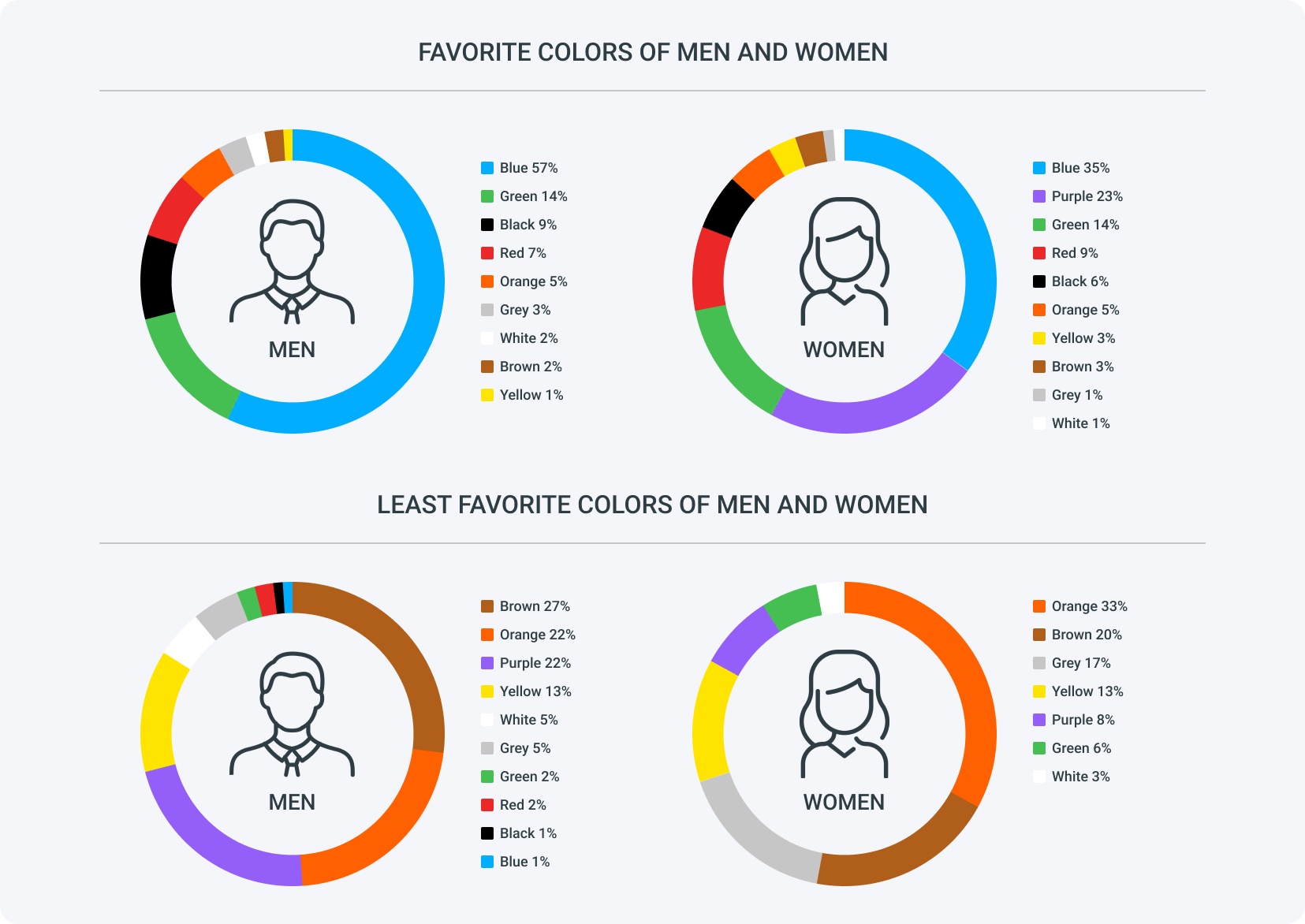
Before you launch, define your target group. Women lean toward subdued shades softened with white; men favor bold, darker colors. Soft palettes lift conversions on beauty affiliate programs aimed at women, while a younger, energetic audience responds to bright, saturated creatives.
Why do colors matter in affiliate marketing?
In affiliate marketing, color choice decides whether a creative blends in or stops the scroll. The right palette aligns a campaign with its vertical and the emotion it should trigger, directly affecting click-through and conversion rates. The wrong one works against you — a poorly matched color makes a strong offer feel untrustworthy or cheap.
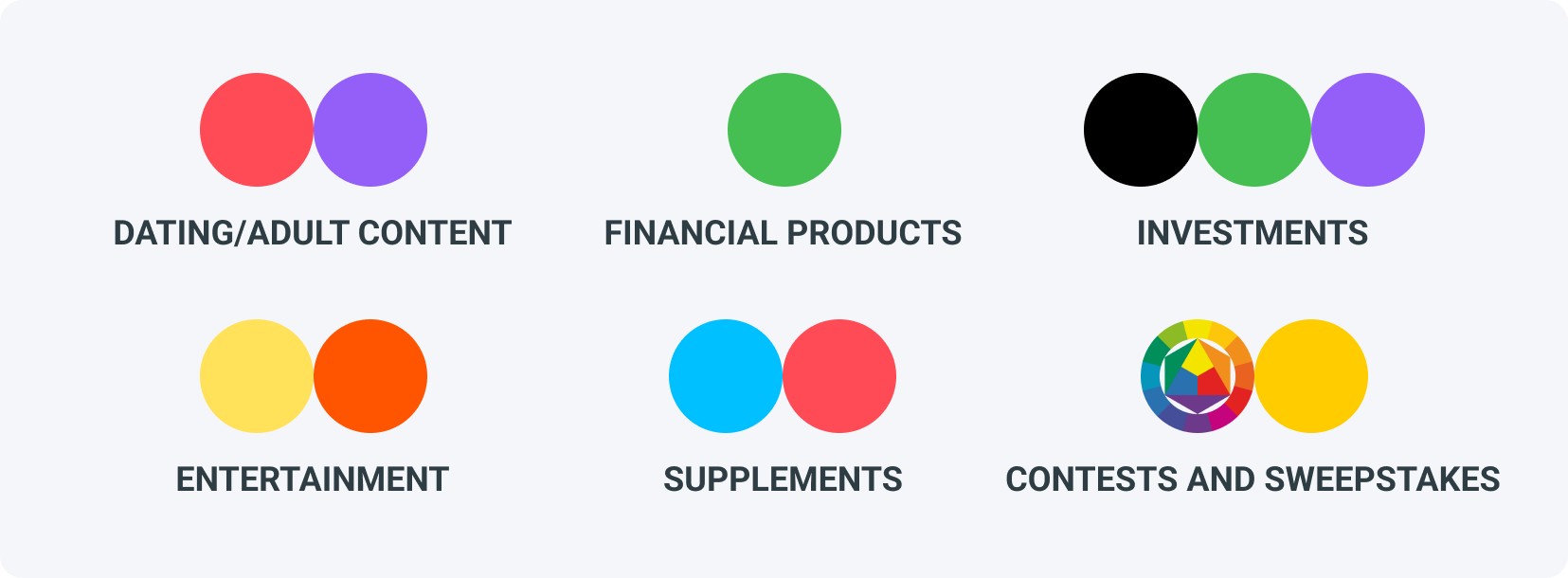
Typical color pairings by affiliate vertical:
Dating and adult content — red and purple to spark passion and desire.
Financial products — green for stability and money associations.
Investments — black, green, and purple to signal prestige and growth.
Entertainment — yellow and orange for energy and fun.
Supplements — blue and red to balance trust and urgency.
Contests and sweepstakes — multicolor with yellow accents to grab attention.
On a landing page, keep one dominant color and reserve a contrasting shade for the button. The rules for an effective landing page start with this kind of visual hierarchy — the wrong palette buries your CTA and kills conversions.
What do the main colors mean in marketing?
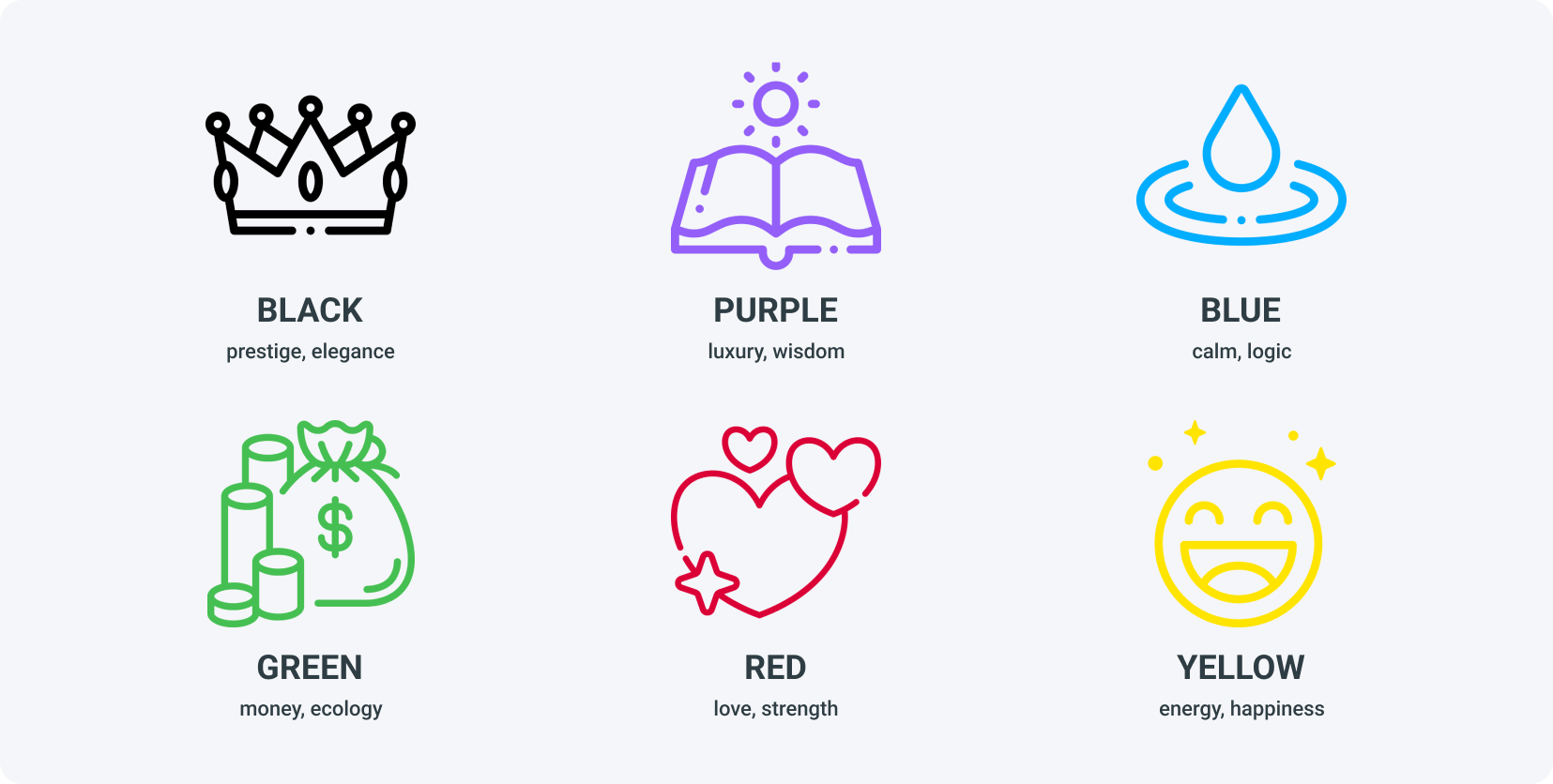
Each color sends a specific signal that primes how customers judge a product. Red drives urgency and passion, green evokes nature and money, blue earns trust, black projects luxury, yellow radiates optimism, and purple suggests prestige. Choosing the shade that matches your offer's promise raises the odds a visitor clicks and converts.
Red — urgency and passion
Red is the color of passion, energy, and urgency, which is why it dominates dating and adult campaigns and any time-limited promotion. It pushes customers toward an immediate decision, powering sale banners and the classic "order now" button. Brands like Coca-Cola use red to trigger appetite and excitement.
Green — nature, money, and balance
Green signals nature, health, and — in its darker shades — money and wealth. The human eye processes green most easily, giving it a calming effect that brands like Spotify use for relaxation. Green fits organic products, eco offers, and finance campaigns where you want to convey stability and growth.

Blue — trust and security
Blue calls to mind water and sky, standing for trust, reliability, and safety. Finance, security, and healthcare brands lean on blue to signal they can be relied on — Oral B uses it to frame products as high-quality. Blue suits medical offers and any campaign where credibility closes the sale.
Black — elegance and prestige
Black communicates elegance, strength, and professionalism, making a product feel premium and valuable. It dominates luxury branding and investment platforms, where seriousness and authority matter. Use black in creatives that target ambitious, status-driven audiences or high-ticket offers where perceived value justifies the price.

Yellow — optimism and attention
Yellow is a warm color tied to joy, energy, and happiness, and psychologists link it to intellect and mental clarity. Its loud, expressive character also makes it a warning signal — think roadside caution signs. In campaigns, yellow grabs attention fast, so it works for entertainment offers and accents that highlight a key benefit.

Purple — luxury and wisdom
Purple is the royal color, standing for power, nobility, luxury, wisdom, and spirituality. It positions premium and exclusive offers, but overuse breeds frustration and rejection — Yahoo keeps purple as an accent rather than a base. Apply purple sparingly to add prestige without overwhelming the design.
Key takeaways
Blue is the universal safe choice — favored by 57% of men and 35% of women and tied to trust and reliability.
Red drives urgency and emotion, making it ideal for dating offers and limited-time CTA buttons.
Green works for finance and eco offers; its darker shades signal money and wealth.
Match the palette to your vertical — the wrong color makes even a strong offer feel cheap or untrustworthy.
Test color variants instead of guessing, because preferences shift by gender, age, and culture.
FAQ
1. Which color converts best for CTA buttons?
Red and orange draw the eye fastest and create urgency, which suits sale and dating CTAs. There is no universal winner, though — the best button color is the one that contrasts with your page and wins your own A/B test.
2. What color builds the most trust?
Blue is the strongest trust signal, which is why finance, security, and healthcare brands rely on it. Green and black also project credibility and stability for money-related offers.
3. Do men and women prefer different colors?
Yes. Blue tops both lists, but women rank purple second and lean toward softer shades with white, while men favor bold, darker tones and dislike purple.
4. How do I choose colors for an affiliate landing page?
Start from the emotion your offer should trigger, match the palette to your vertical, and keep one dominant color plus a contrasting accent for the CTA. Then test variants against real traffic before scaling.
Summary
Color psychology in affiliate marketing turns a design detail into a conversion lever: red sparks urgency, blue earns trust, green signals money, and black sells luxury. Match each palette to your audience and vertical, test your CTA colors, and the right shade becomes higher earnings. Register as a MyLead publisher and apply these palettes to live campaigns.
Have any questions? Feel free to reach us through our channels.