Blog / Guides
How to Configure Offerwall Rewards in MyLead? A Step-by-Step Guide
This article is updated regularly
Last update:
25 August 2025
Offerwall Rewards is a MyLead monetization tool that displays a wall of sponsored offers on a site or app and pays the publisher a commission each time a user completes one. The configuration runs through nine steps in the publisher panel — naming, currency multiplier, design, offers, Postback and embedding — all available under the Tools tab.
This guide walks you through all nine configuration steps in the MyLead panel — from naming your Offerwall to embedding it with an iframe. You will learn how each setting affects your earnings.
What you'll learn from this article:
how to start the Offerwall Rewards configuration and name it,
how the currency multiplier converts payouts into user points,
how to choose offers, set up Postback and add tracking parameters,
how to embed the finished Offerwall on your website or app.
What is Offerwall Rewards and how do you start the configuration?
Offerwall Rewards is a MyLead tool that monetizes non-paying visitors by rewarding them with virtual currency for completing advertiser offers. The starting point sits in the publisher panel under the Tools tab, in the Offerwall Rewards section. The Add OfferWall Rewards button opens the configuration wizard, where every later setting is defined.
After logging in, open the Tools tab on the left of the panel and go to Offerwall Rewards, then click Add OfferWall Rewards to begin. For the full background on the feature, read our guide on Offerwall Rewards monetization.

How do you name your Offerwall and set the currency multiplier?
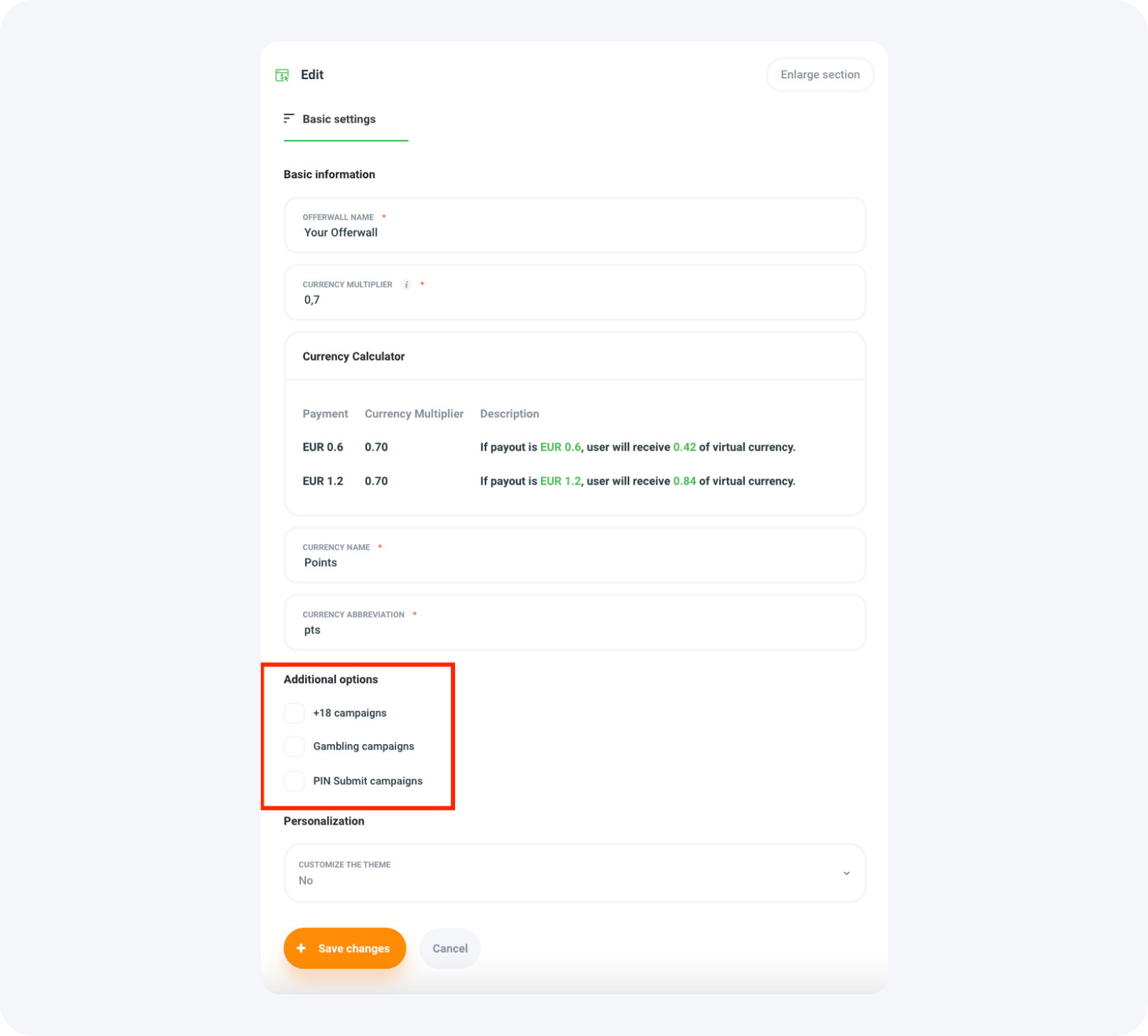
The name identifies a configuration in the panel, which matters once several Offerwalls are active. The currency multiplier sets how much of an offer's payout becomes user points: payouts are calculated in the publisher's currency, so with EUR the points are expressed in cents and the multiplier scales them into the reward shown to players.
After launching the wizard, enter a name that easily identifies the Offerwall — useful when you manage multiple configurations.
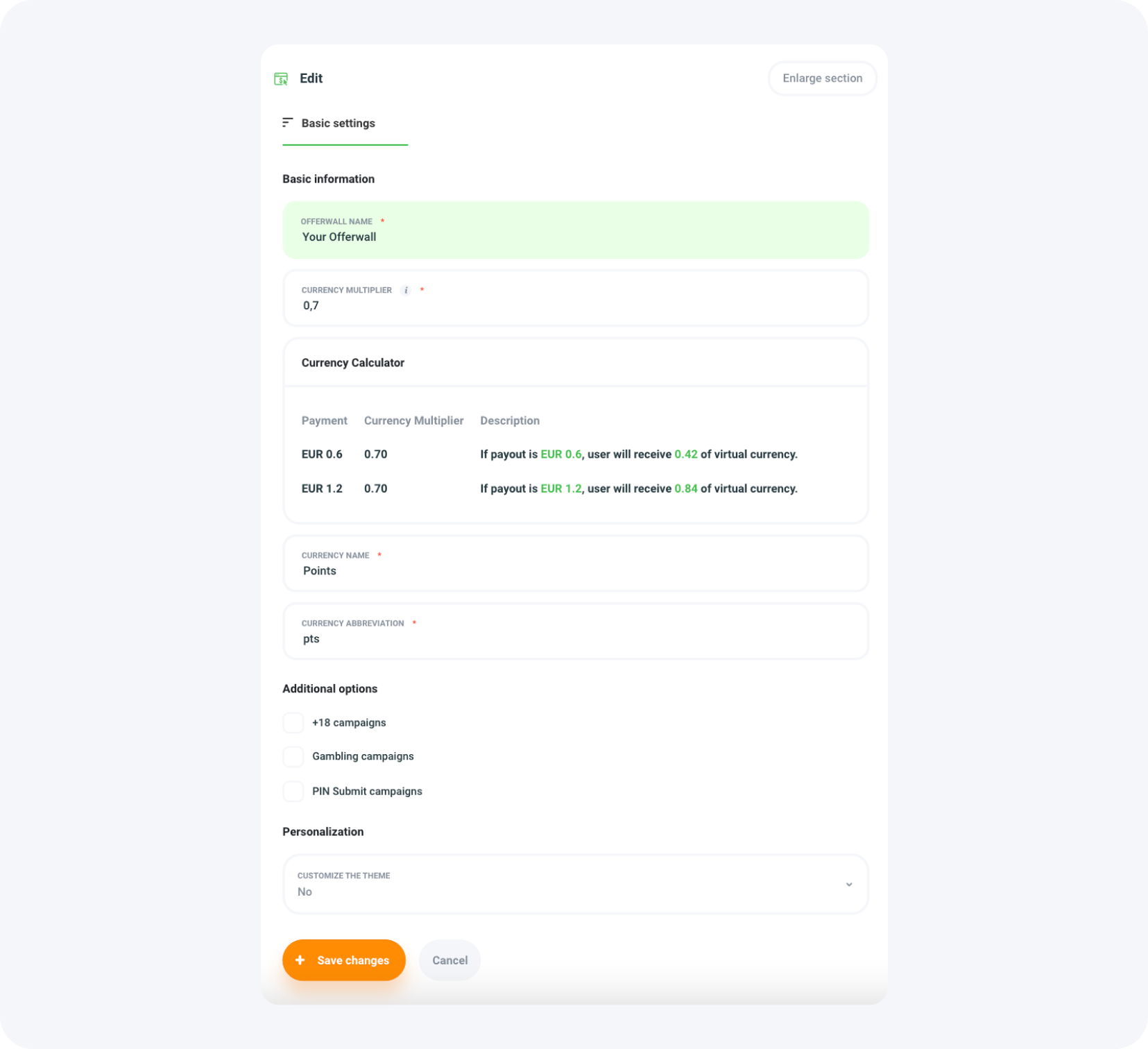
The multiplier works on a simple ratio. With a €5 payout and a multiplier of 0.7, the player sees 350 points (500 cents × 0.7 = 350). If the user converts, you receive €5 and the player gets 350 points, equal to €3.50.
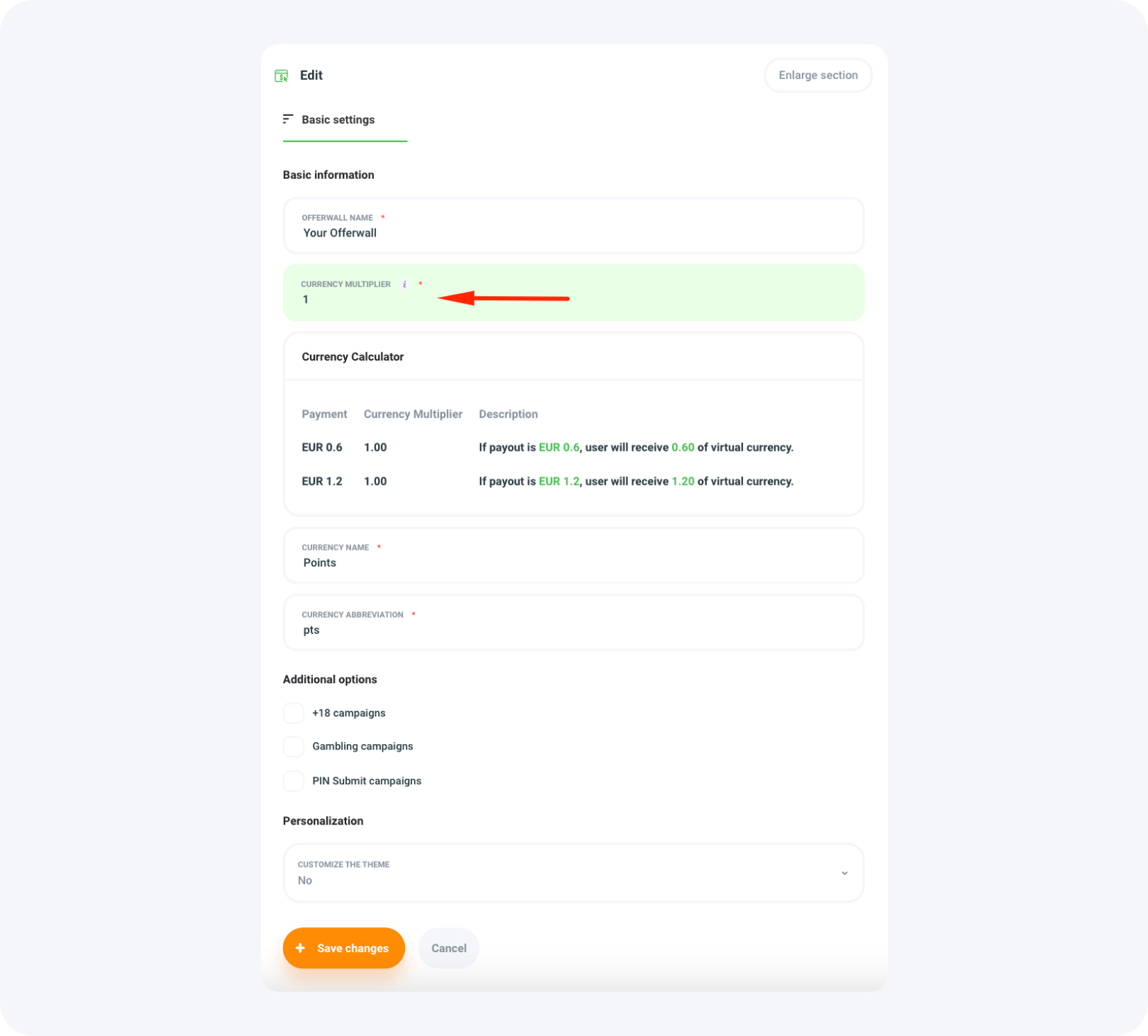
You can also rename the points users earn and set their abbreviation — for example Points and pts — so the reward matches your brand.
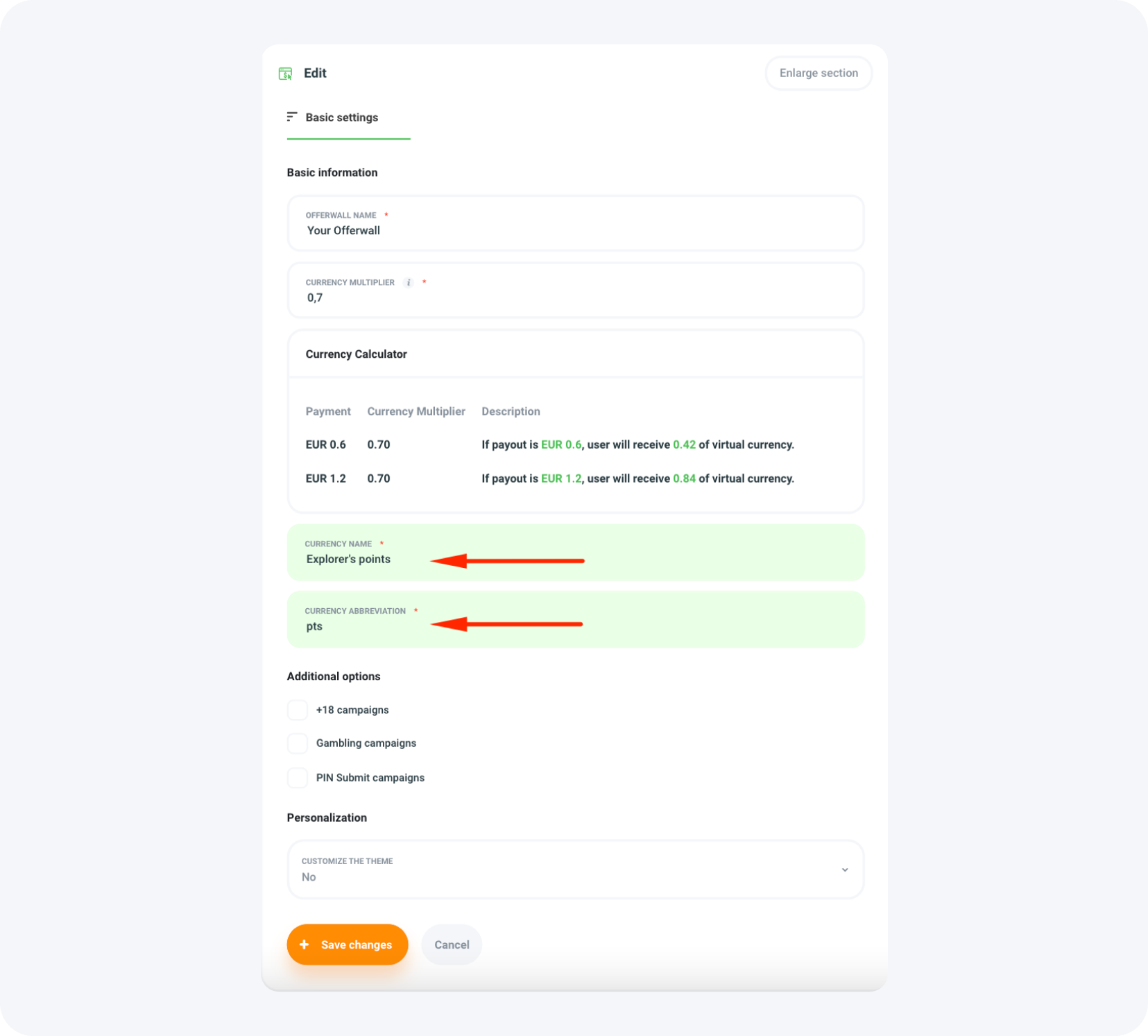
Additional options let you display adult, gambling or PIN Submit campaigns on the Offerwall, widening the pool of offers when your audience allows it.
How do you customize the look of your Offerwall?
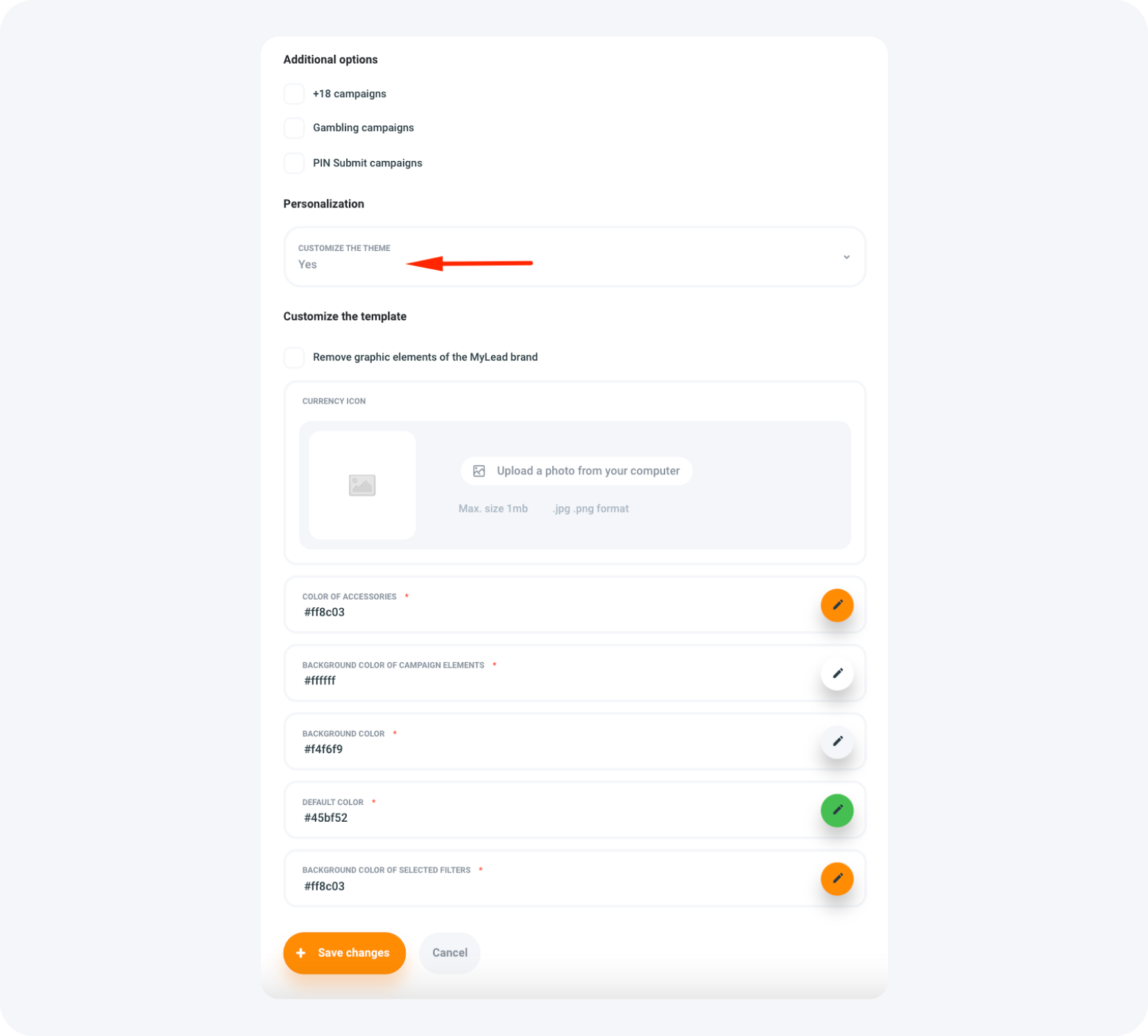
Customization aligns the Offerwall's appearance with the site or app it lives on, which raises trust and engagement. The panel shows a live preview on the right: the default MyLead layout can stay, or its graphic elements can be removed in favour of a custom currency icon and a colour scheme matched to the host platform.
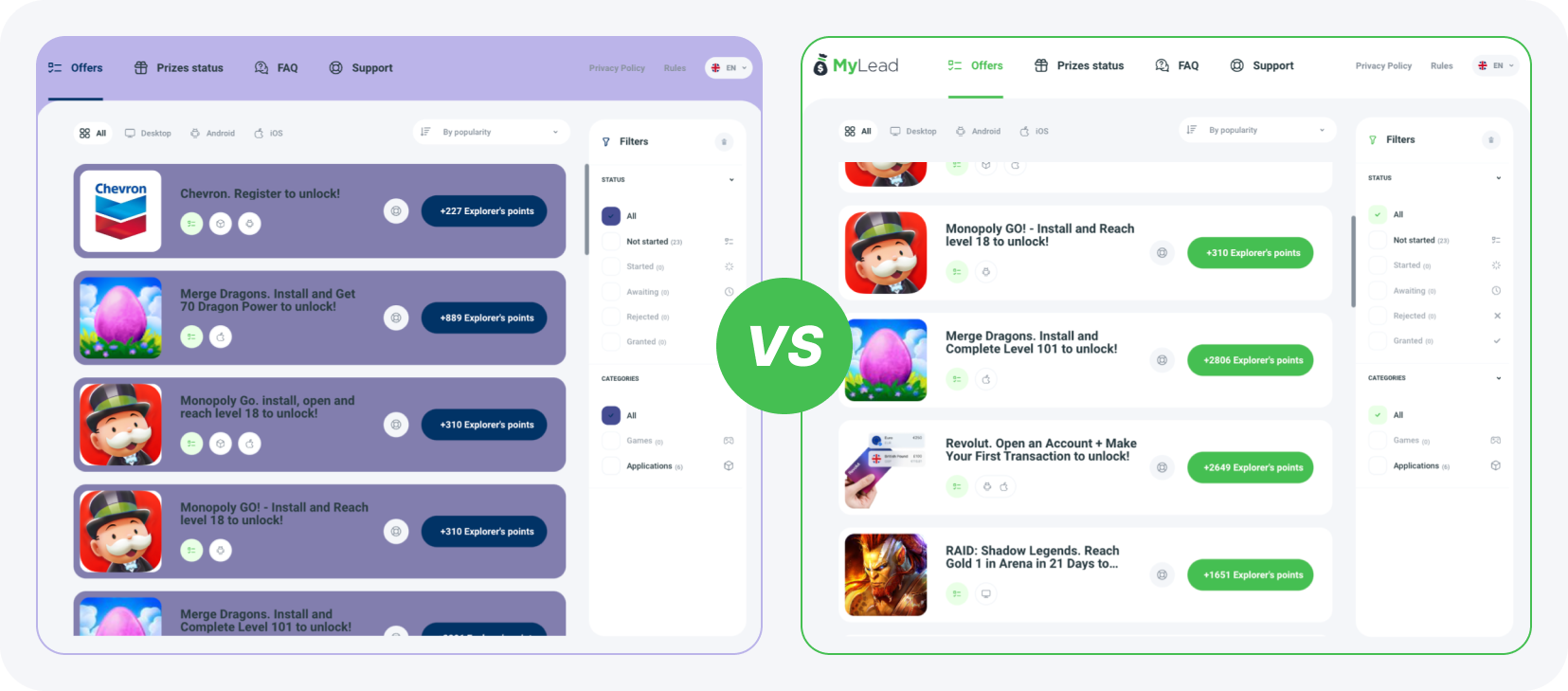
Consistent colours make the Offerwall feel like an integral part of your portal rather than a bolt-on widget. The comparison below shows a cosmic-themed Offerwall next to the default version.
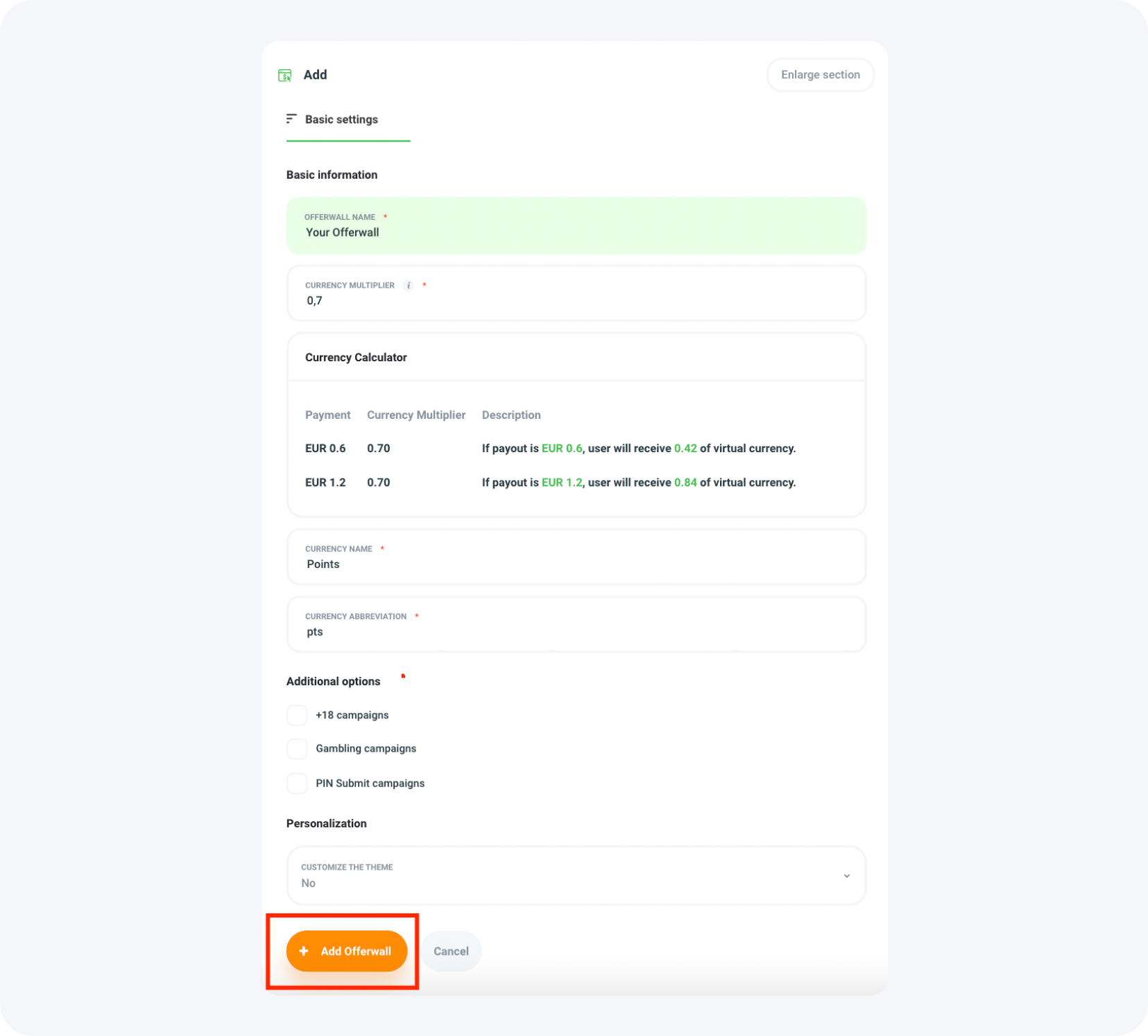
When the look is ready, the orange Add Offerwall button saves the configuration.
How do you choose offers for your Offerwall?
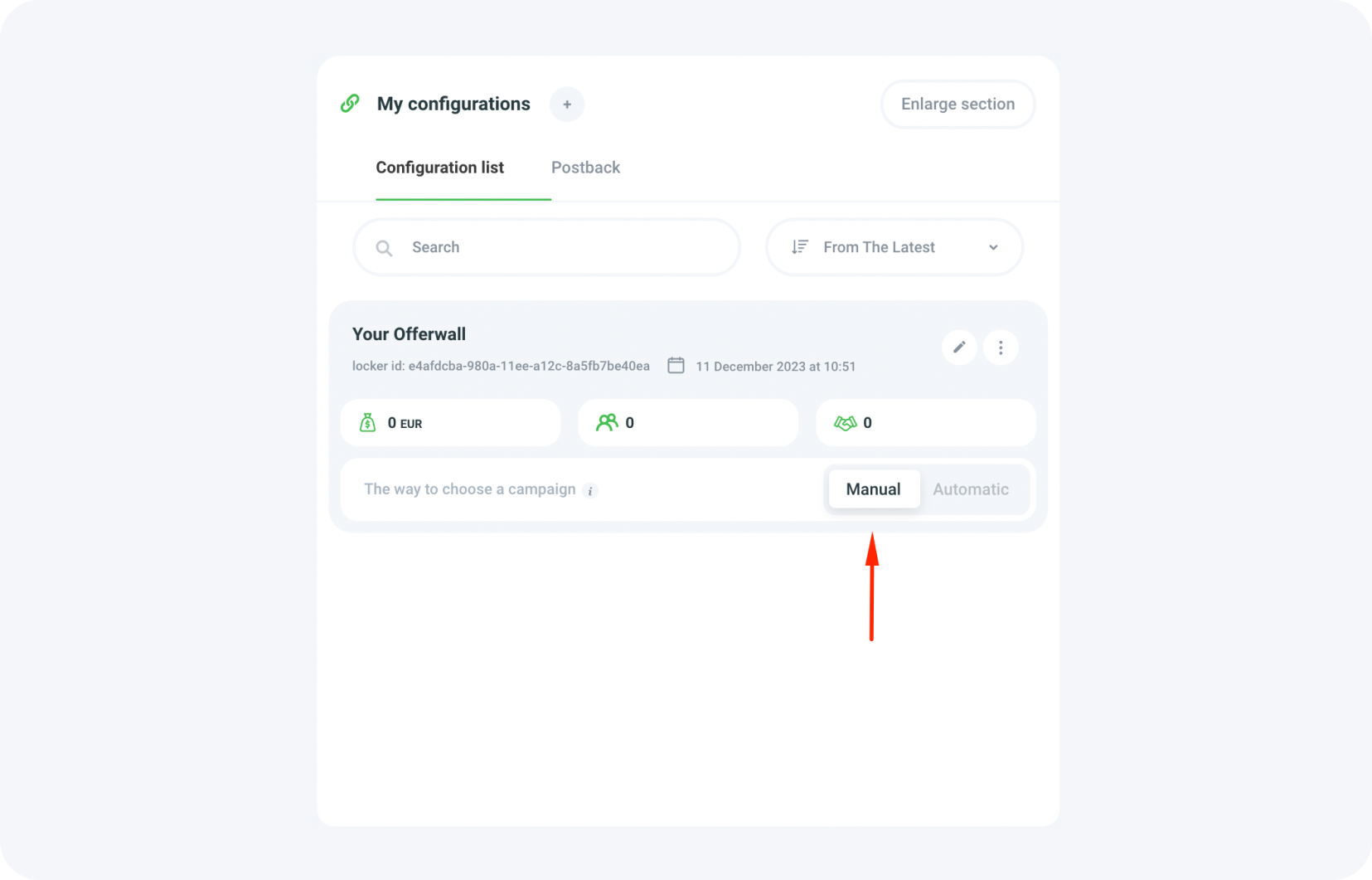
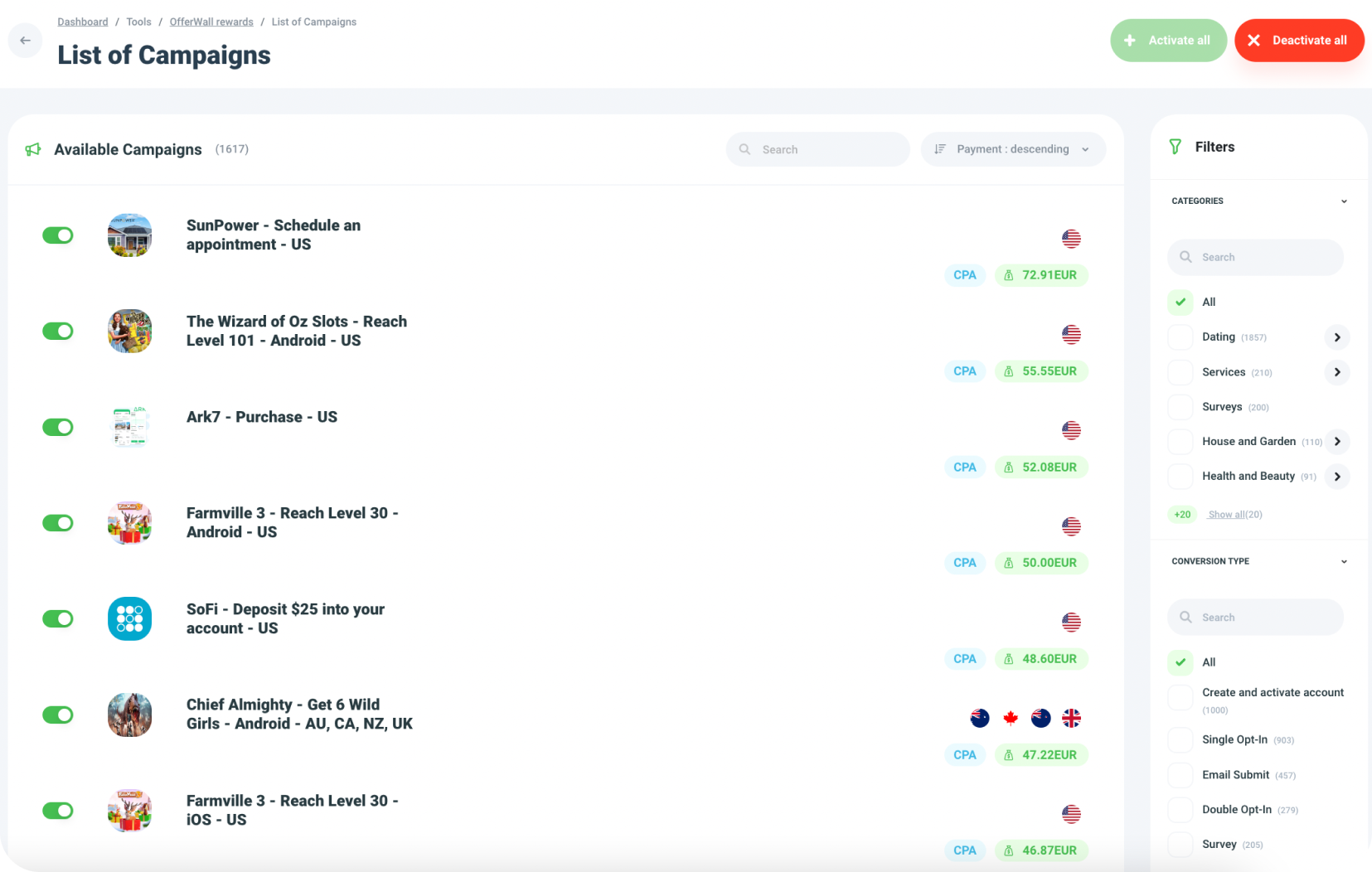
Offer selection decides which campaigns reach users, and MyLead provides two modes. Automatic mode lets the proprietary system pick high-quality, popular offers matched to each user's location and device. Manual mode hands full control to the publisher, who selects campaigns by category, country and device and toggles each offer individually.
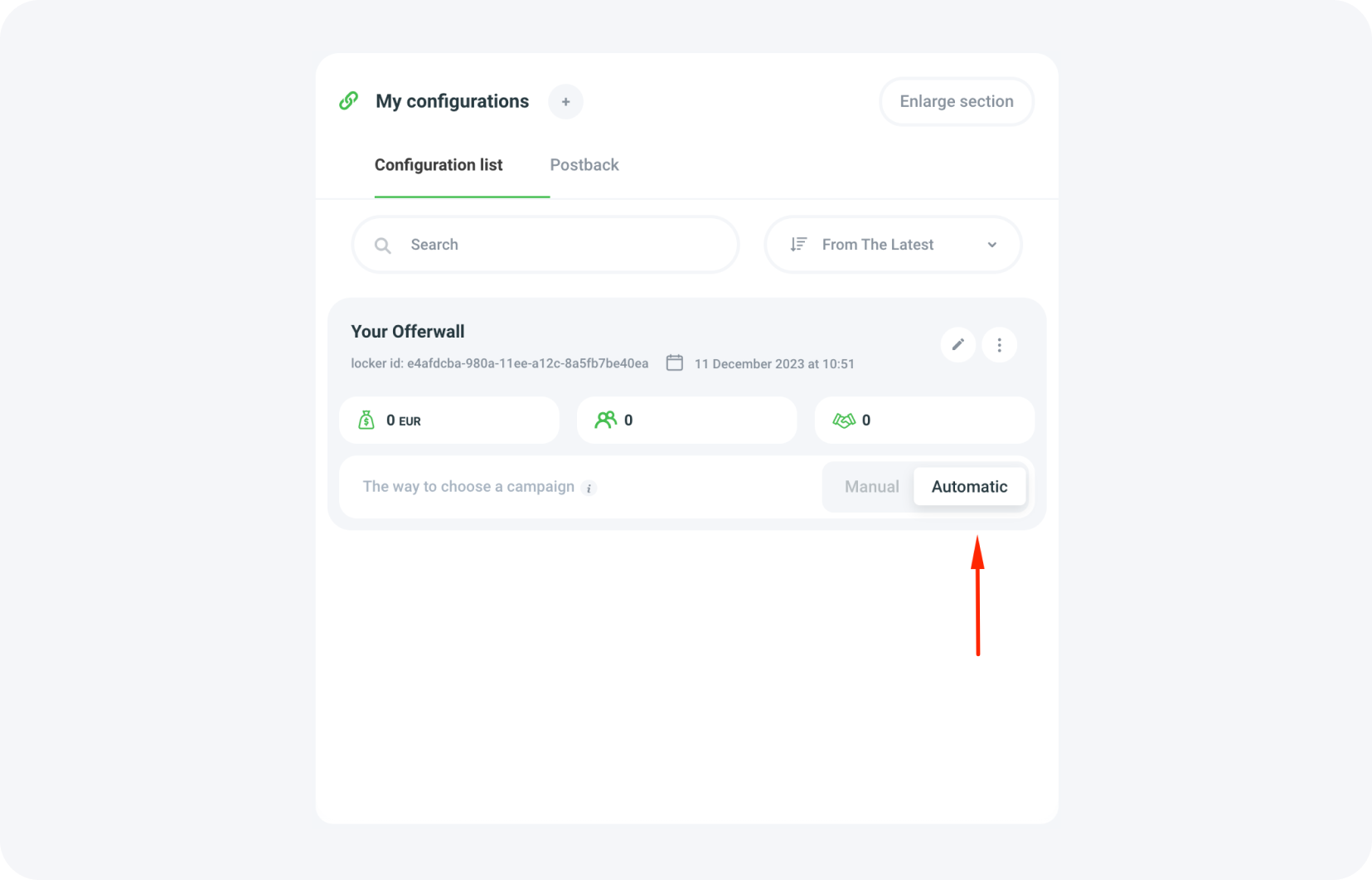
After saving, open the created Offerwall to choose offers. Automatic mode suits a quick launch, while Manual mode rewards careful curation.
Clicking an offer reveals a detailed description, and an activation switch on each offer — rarely available among competitors — enables precise management. Weigh the trade-offs in our facts and myths about Offerwall.
How do you configure Postback for the Offerwall?
Postback is a server-to-server integration that delivers conversion data for an Offerwall configuration. Every configuration should have its own Postback so user points are credited correctly. It is created from the configuration view, where a conversion status triggers the signal, a destination URL receives the data, and selected parameters define what information arrives.
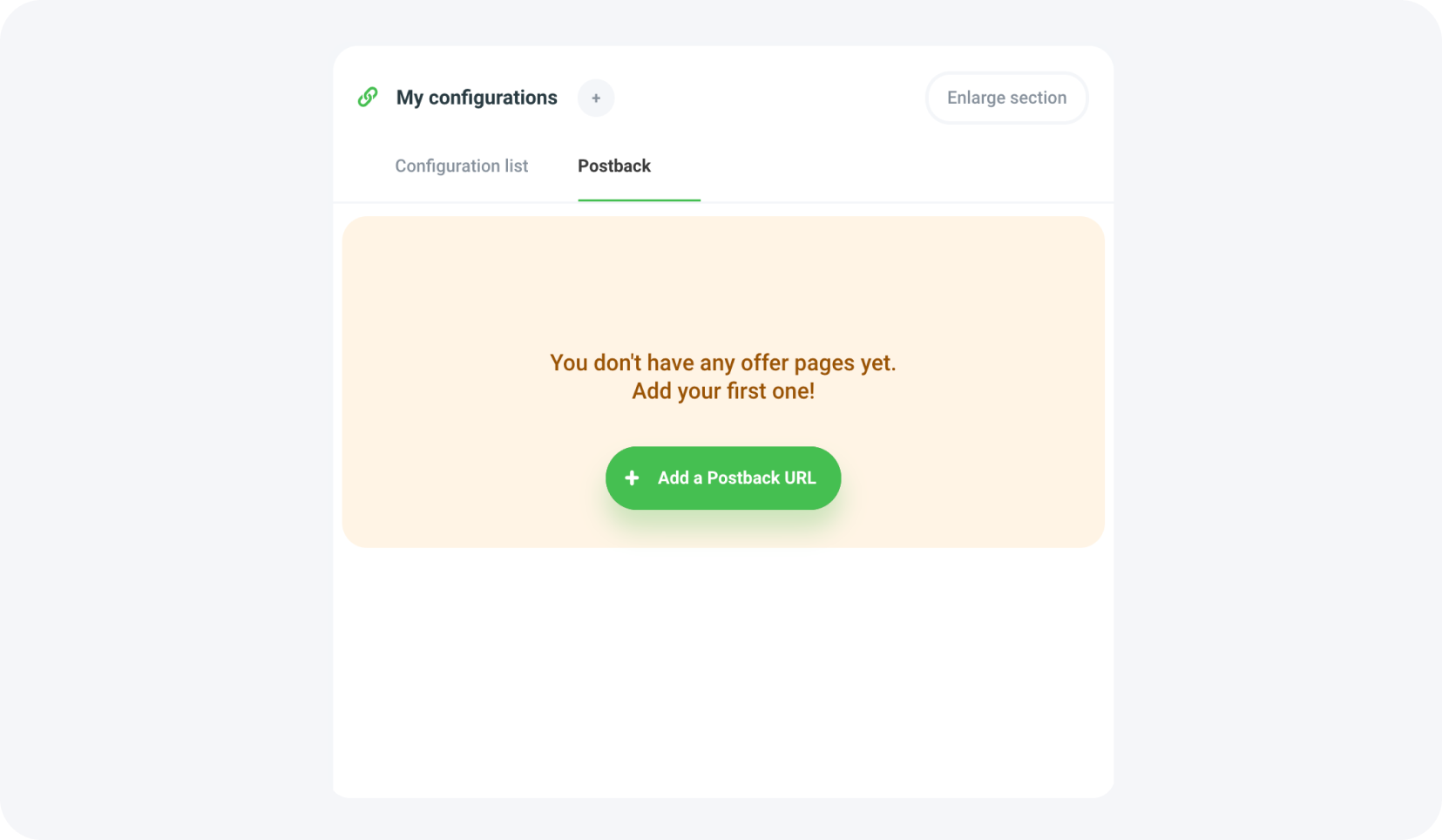
Selecting the All status is strongly recommended — separate Postbacks per status work, but anything less risks missing data needed to manage points. Insert the URL where lead statuses should arrive, then pick parameters such as transaction_id, payout, status, ml_sub1-5, player_id and virtual_amount.
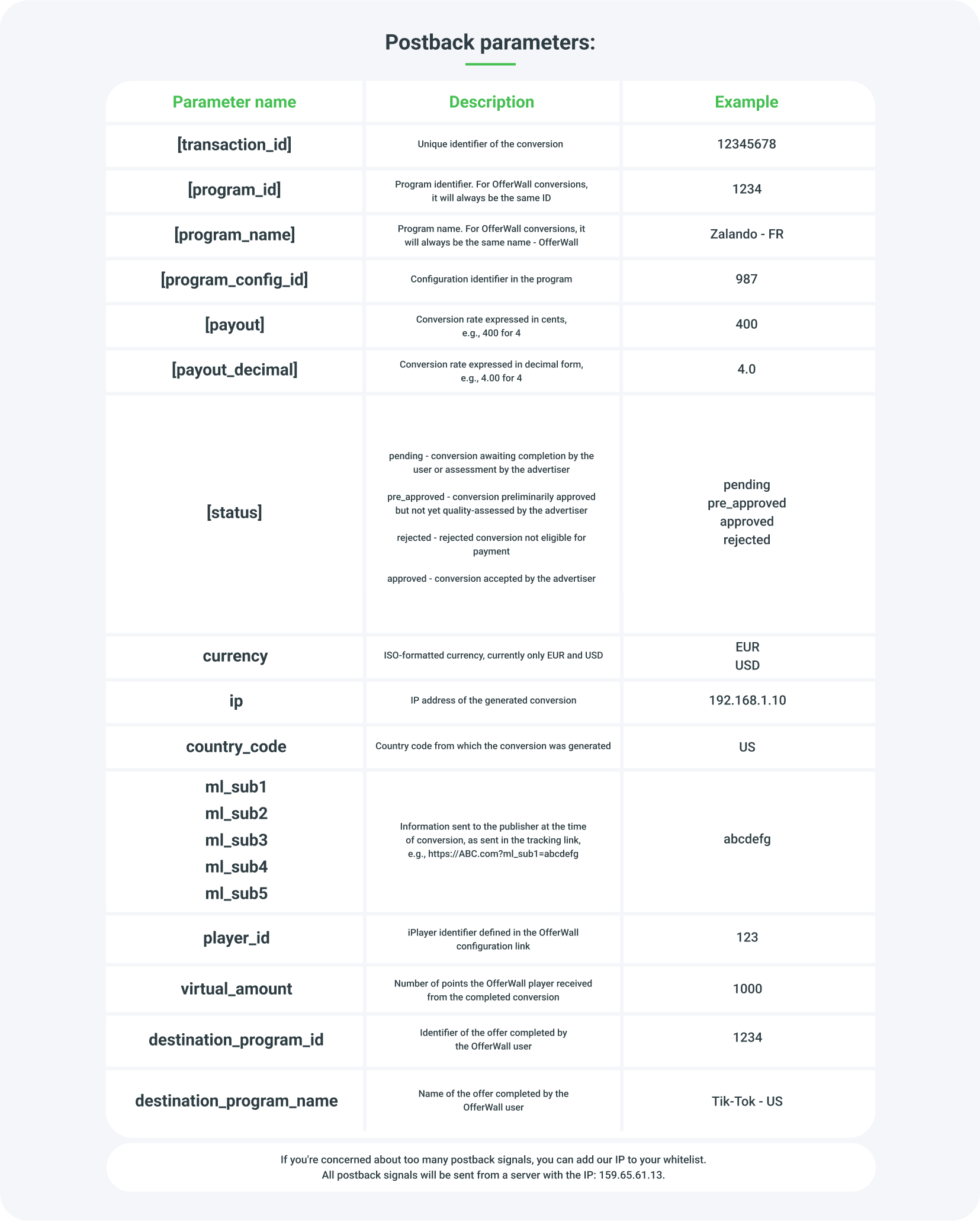
All Postback signals are sent from IP 159.65.61.13, which you can add to a whitelist. Add the chosen parameters to the configuration and finish with Create Postback URL.
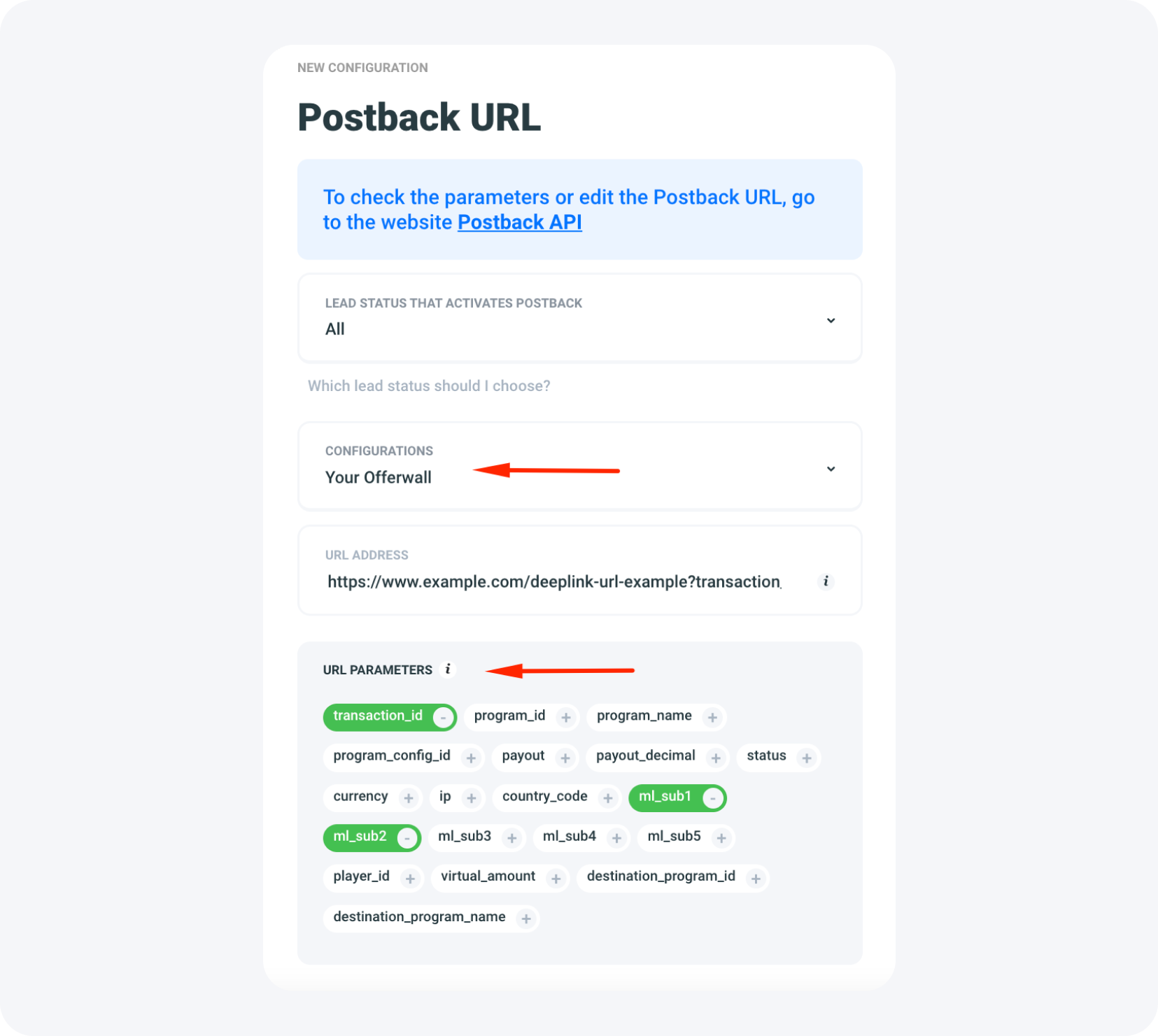
For deeper detail, see the Complete MyLead Guide – Postbacks and how Postback in affiliate marketing works.

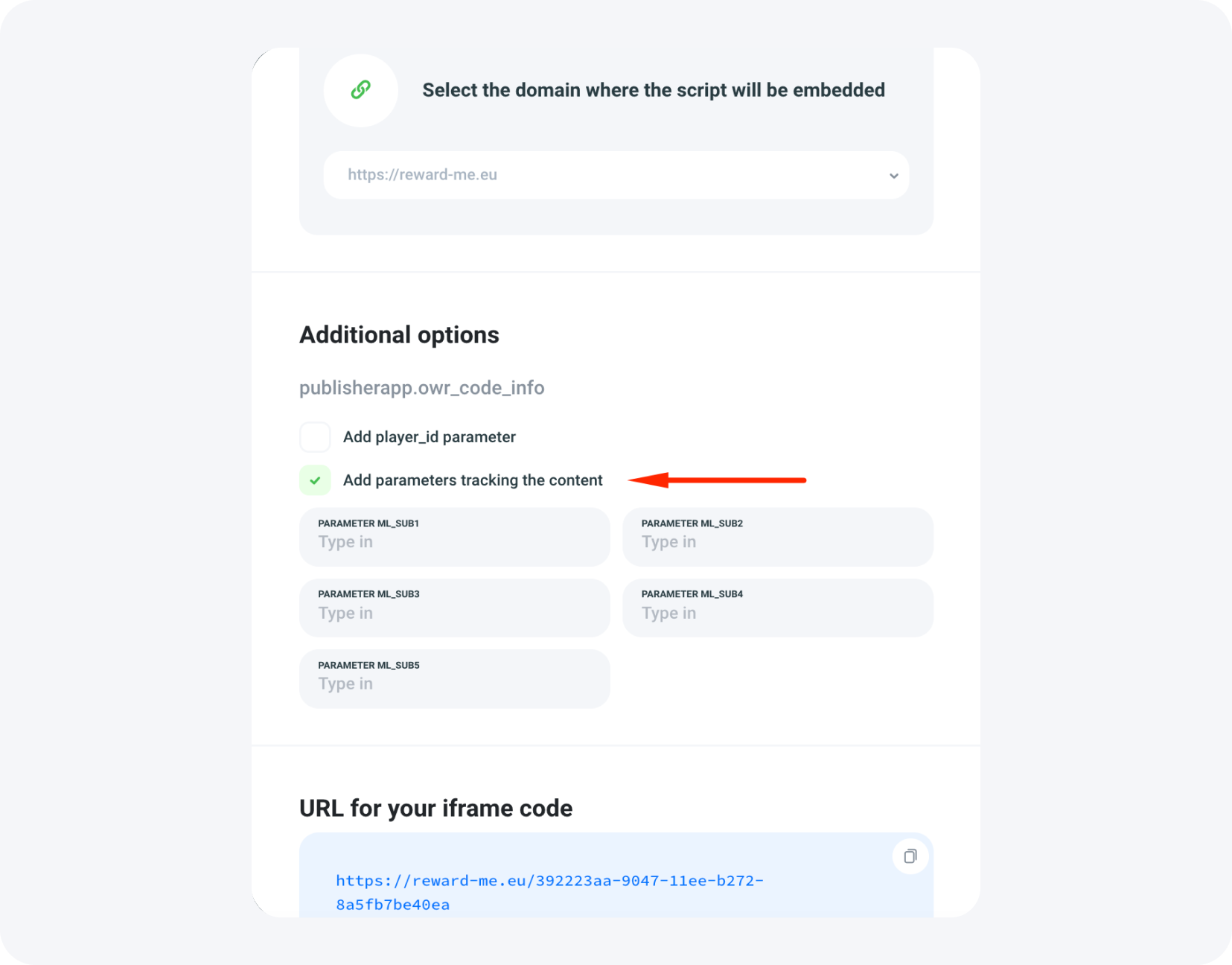
How do you add Player ID and tracking parameters?
Tracking parameters and Player ID turn one Offerwall into a measurable, multi-site tool. Player ID is the unique user identifier passed in the link as player_id; MyLead recommends UUID (version 1) or Integer format and generates one automatically on a user's first visit if none is supplied. The ml_sub1-5 parameters track each lead's source in real time.
Open Website codes from the three-dots menu next to the edit button to pick these features. Assigning your system's user ID to the Offerwall keeps player data consistent.
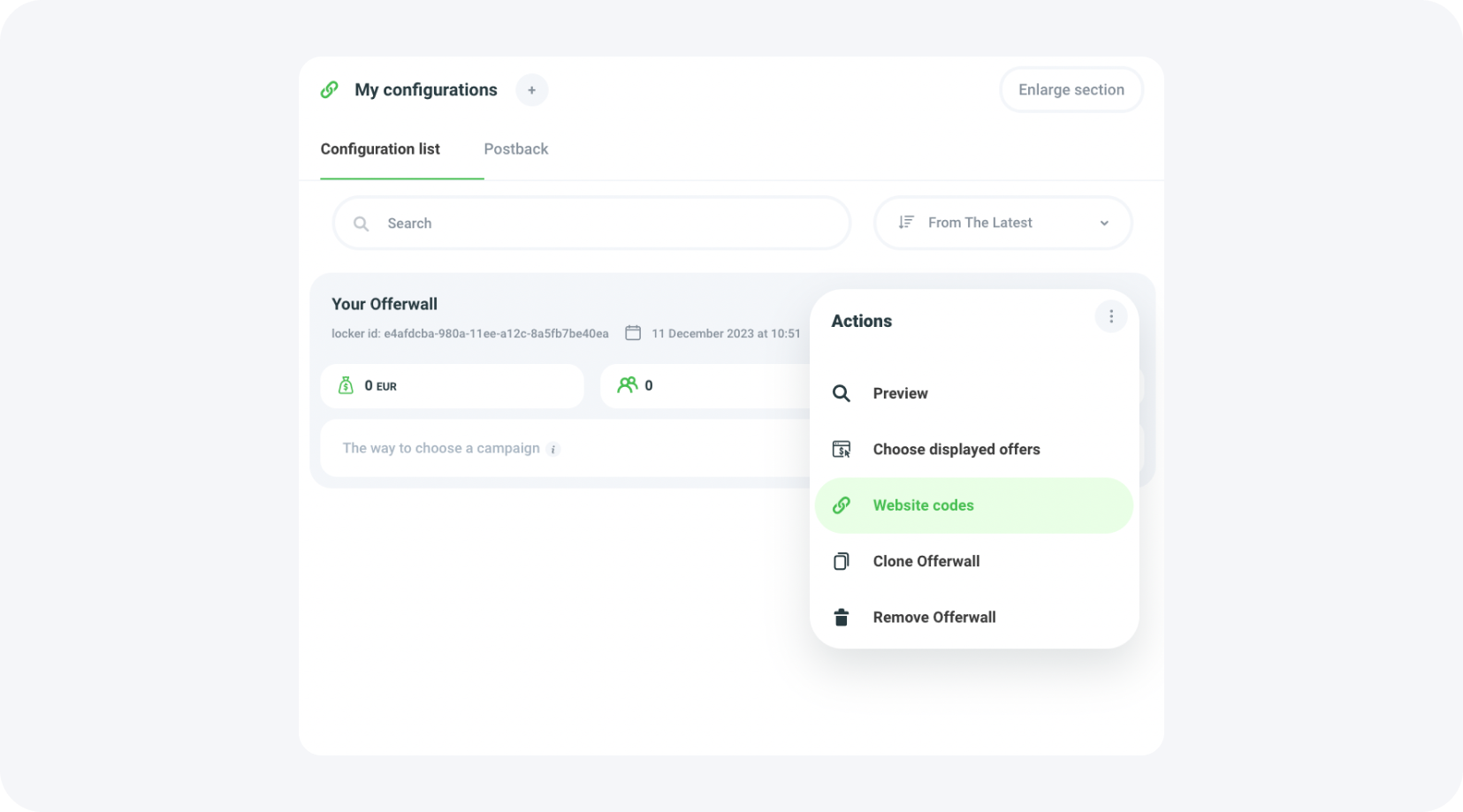
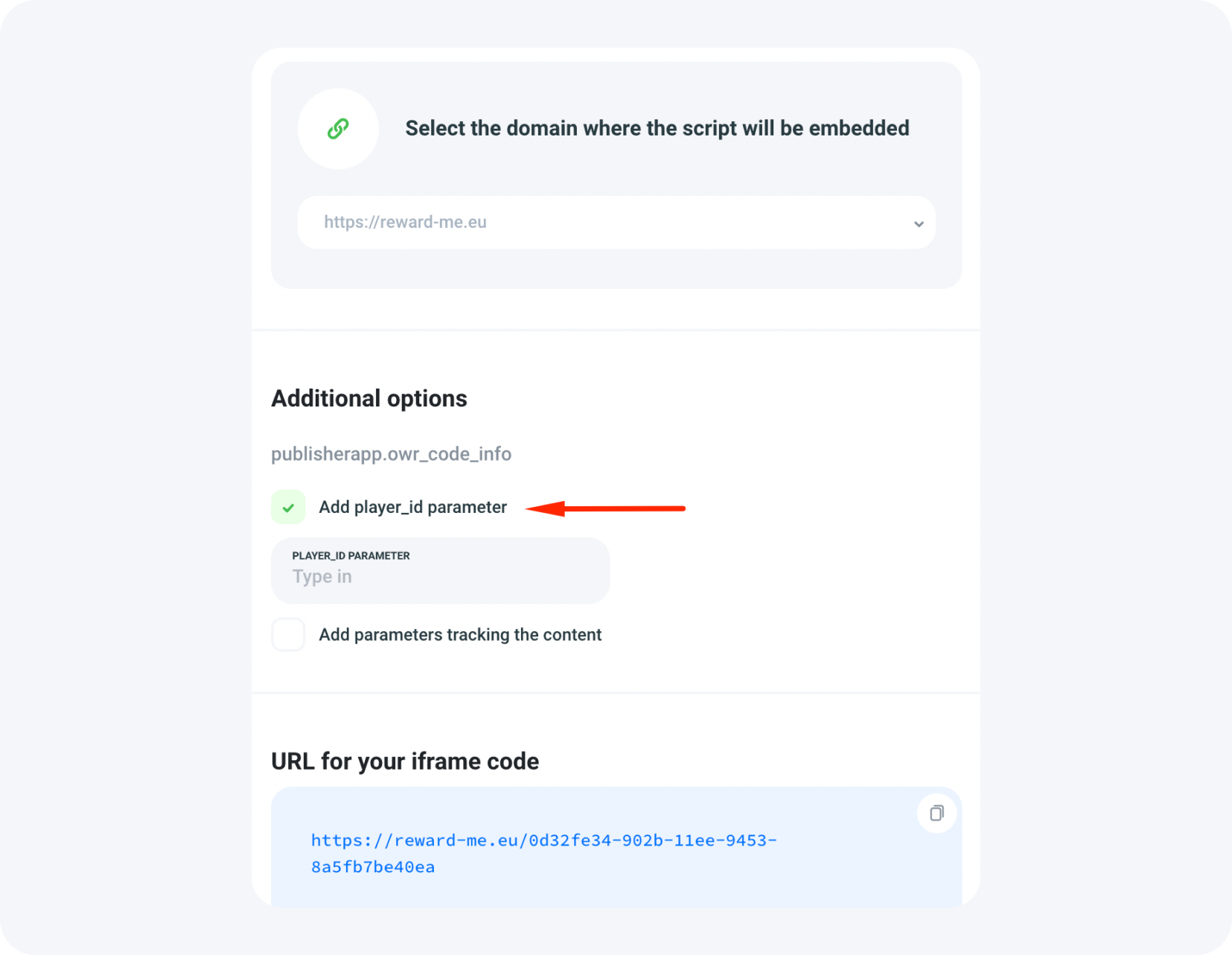
With ml_sub1-5 you promote one configuration across several sites or apps and still trace every lead's exact origin — no need for dozens of separate setups. Learn the broader workflow in how to set up a tracker.
How do you embed the Offerwall on your website?
Embedding publishes the finished Offerwall on a chosen domain. MyLead offers two methods: pasting the direct Offerwall configuration URL, or using a sample iframe code on the page. Both are generated after the domain is selected, and the chosen snippet is copied straight into the site's HTML.
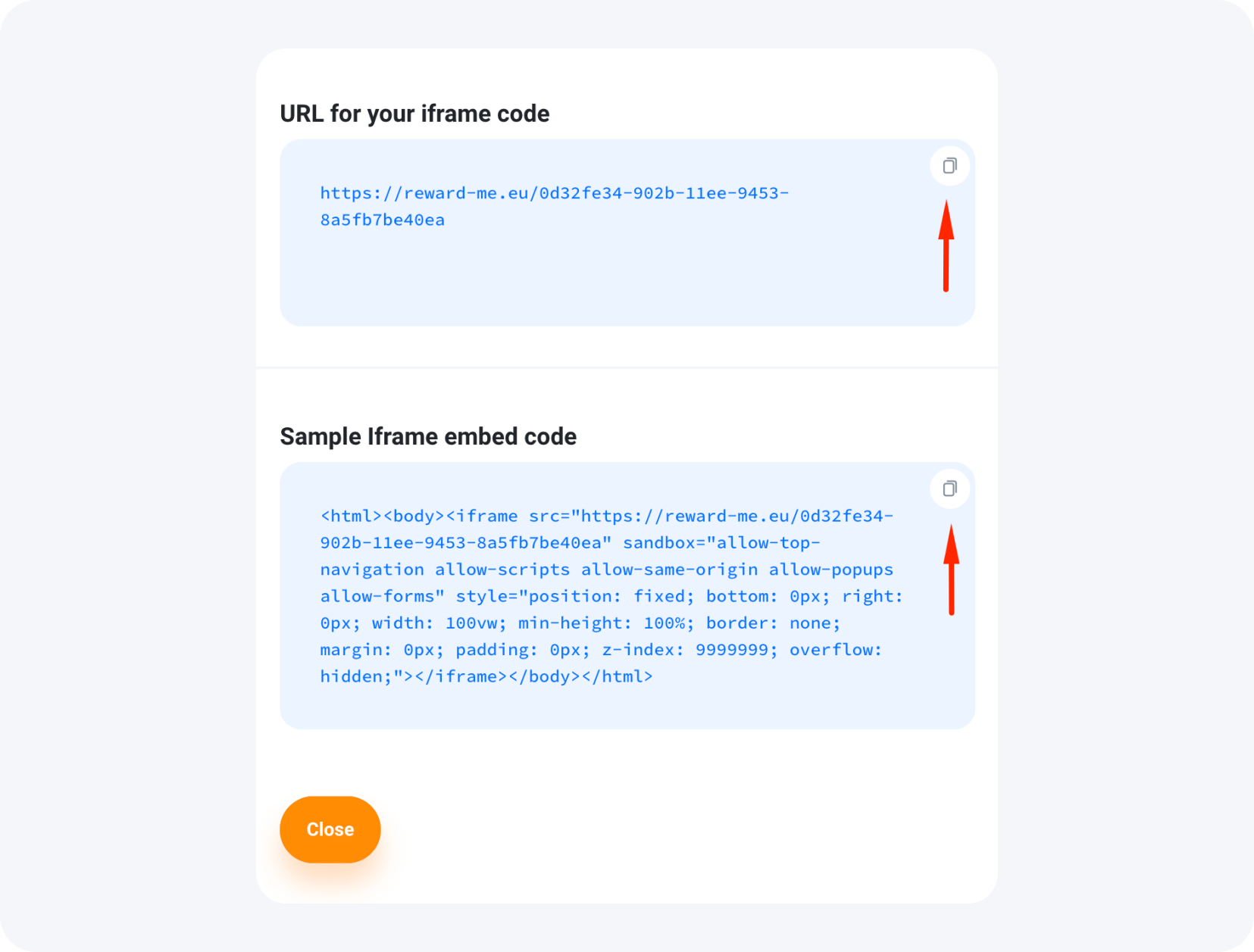
Select the domain, choose the URL or iframe method, then copy and paste the code where the Offerwall should appear. In the panel you can add more configurations, search them by name, reorder them, clone or delete any setup, and monitor stats such as profit, visits and acquired leads. Ready to monetize idle traffic? Set up your first Offerwall Rewards configuration and explore more ways to monetize apps and games.
Key takeaways
Offerwall Rewards monetizes non-paying visitors by rewarding them with virtual currency for completing sponsored offers.
The currency multiplier controls the points-to-payout ratio — a 0.7 multiplier on a €5 offer gives the user 350 points while you keep €5.
Automatic mode picks high-converting offers by location and device; Manual mode adds per-offer activation switches.
Every configuration needs its own Postback with the All status to receive complete conversion data.
One configuration with ml_sub1-5 tracking and a Player ID can run across multiple sites while keeping lead sources separate.
FAQ
1. Is Offerwall Rewards free for MyLead publishers?
Yes. MyLead is free for publishers — you create Offerwall configurations at no cost and earn a commission on each completed offer.
2. What is the currency multiplier in Offerwall Rewards?
It sets what share of an offer's payout becomes user points. With a €5 payout and a 0.7 multiplier the user sees 350 points, while you still receive €5.
3. What is the difference between Automatic and Manual offer modes?
Automatic mode lets MyLead's system pick popular offers by location and device. Manual mode lets you select campaigns yourself and switch each one on or off.
4. Can I use one Offerwall configuration on multiple websites?
Yes. With ml_sub1-5 tracking parameters, a single configuration runs on several sites or apps while you still identify each lead's exact source.
5. What is the Player ID parameter used for?
Player ID is the unique user identifier in your Offerwall, passed as player_id. MyLead recommends UUID (v1) or Integer format; if omitted, it is generated on the user's first visit.
Summary
Configuring Offerwall Rewards in MyLead runs through nine panel steps — naming, currency multiplier, design, offers, Postback, tracking and embedding. Get the currency multiplier and Postback right, and a single configuration can monetize several sites at once. Walk through every chapter in the Complete MyLead Guide – Offerwall Rewards and turn non-converting traffic into commission.
Have any questions? Feel free to reach us through our channels.