Blog / Affiliate marketing
How Do You Drive Traffic to Your Website?
This article is updated regularly
Last update:
11 March 2026
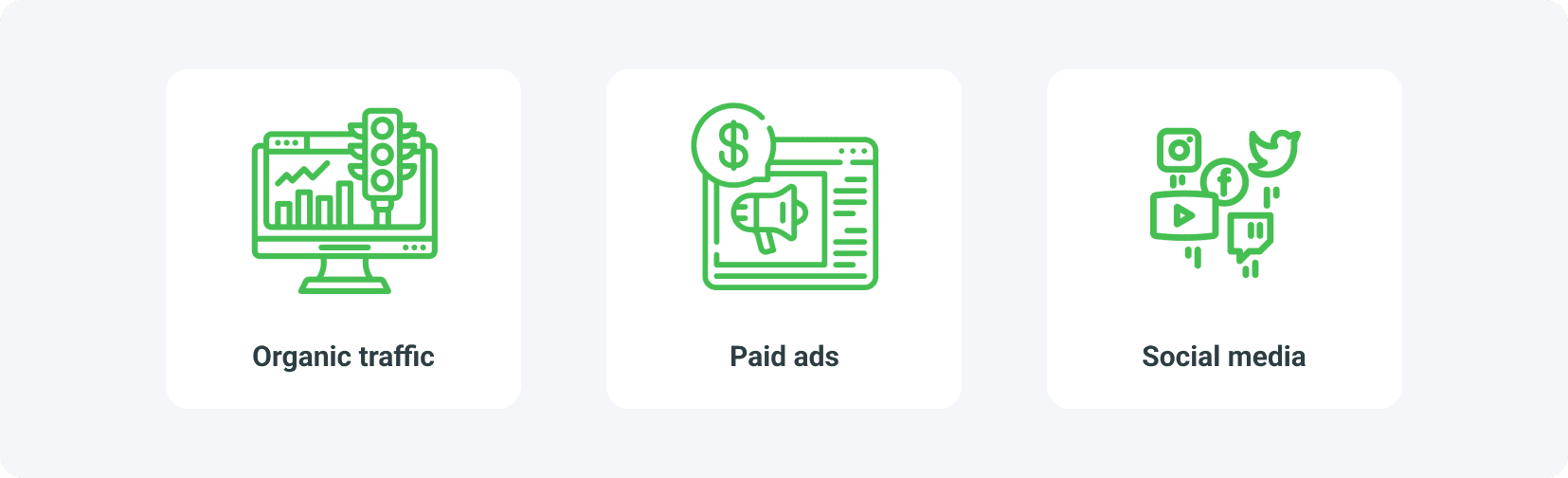
To drive traffic to your website, you need three core channels: organic search traffic from SEO, paid ads such as Google Ads, and social media promotion on platforms like Facebook and Instagram. Each channel reaches a different audience, and combining all three builds steady, scalable visits to your pages rather than relying on a single source.
This guide breaks down each traffic source, shows which one fits your goals, and explains why Black Hat SEO can destroy your website traffic instead of growing it.
What you'll learn from this article:
why publishing a website is not enough when over 1.5 billion sites already compete online,
how to generate organic traffic through search engines and SEO,
when paid ads like Google Ads are worth the investment,
how to use Facebook and Instagram to drive visitors to your pages,
why Black Hat SEO can get your website penalized by Google.
What are the most effective ways to increase website traffic?
The three most effective ways to increase website traffic are organic search traffic, paid advertising, and social media. Organic traffic comes from search engines through SEO, paid ads place your site at the top of results instantly, and social media builds reach through platforms like Facebook and Instagram. Most websites grow fastest when all three work together.
Organic traffic
Organic traffic includes every visitor who reaches your website through unpaid search results on Google or Bing. You build it through SEO (Search Engine Optimization) — improving content, keywords, and site structure so search engines rank your pages higher. Organic traffic is free and durable, but measurable results take three to six months of consistent work.
Start with a practical SEO checklist to optimize your titles, headings, and content for higher search rankings.
Paid ads
Paid ads put your website at the top of search results or social feeds the moment you launch a campaign. With Google Ads or Microsoft Ads, you bid on keywords and pay per click, so your page appears instantly for the terms you choose. The cost depends on how competitive your keywords and target audience are.
To scale faster, media buying lets you purchase targeted visits at a predictable cost per click.
Social media
Social media drives website traffic by promoting your content to engaged audiences on platforms like Facebook and Instagram. You share links, build a community, and direct motivated followers straight to your pages. Used skillfully, social networks generate steady referral traffic and amplify every other channel, since shared content often earns links and search visibility too.
No audience yet? Learn how to grow your social media following from zero and convert followers into website visitors.
Why does your website have so few visitors?
Your website has few visitors because there are over 1.5 billion websites online, and publishing a page without promotion leaves it invisible. Modern CMS tools make building a site simple, but they do nothing for visibility. Without an active strategy — SEO, ads, or social media — your website stays buried, like a project never published.
Building a site is the easy part; getting it seen is the real work. A blog is one of the most reliable traffic engines, because every new article gives search engines fresh content to index and rank — see our guide on how to start a blog.
Should you choose free or paid traffic?
Choose free traffic (organic SEO and social media) for long-term, sustainable growth, and paid traffic for instant visibility while you build it. Organic traffic costs only time and delivers results in three to six months. Paid ads cost money but generate visits within hours. The strongest strategy combines both: paid ads jumpstart traffic while SEO compounds over time.
| Channel | Cost | Speed | Best for |
|---|---|---|---|
| Organic traffic (SEO) | Free (time only) | 3-6 months | Long-term sustainable growth |
| Paid ads | Pay per click | Within hours | Instant visibility and testing |
| Social media | Free to low | Days to weeks | Community and referral traffic |
There is no single winner; the right mix depends on your budget and timeline, as our breakdown of paid versus free traffic explains. Once visitors arrive, you can monetize them — sign up for a free MyLead publisher account and earn commissions from affiliate offers.
Why should you avoid Black Hat SEO?
You should avoid Black Hat SEO because these tactics violate search engine rules and trigger Google penalties that can block your website entirely. Black Hat methods — keyword stuffing, hidden text, link schemes — promise fast rankings, but Google detects them and removes offending sites from results. The damage wastes your time, money, and hard-earned reputation.
Stick to white-hat methods: quality content, honest link-building, and fast, user-friendly pages. The same discipline protects your accounts — see how to avoid getting your account blocked.
Key takeaways
Three channels drive website traffic: organic SEO, paid ads, and social media — combine them for the best results.
Organic traffic is free and durable, but it takes 3-6 months of consistent SEO to show measurable results.
Paid ads deliver instant visibility at the top of search results, ideal for jumpstarting a new website.
Social media on Facebook and Instagram builds community and steady referral traffic.
Avoid Black Hat SEO entirely — Google penalties can block your site permanently and waste your investment.
FAQ
1. Why isn't my new website getting any traffic?
With over 1.5 billion websites online, publishing a site is no longer enough. Without active promotion through SEO, paid ads, or social media, your website stays invisible to potential visitors.
2. What is organic traffic?
Organic traffic is the visitors who reach your website through unpaid search results on Google or Bing. You earn it with SEO, which improves how search engines rank your pages.
3. Are paid ads worth it for a new website?
Yes. Paid ads place your website at the top of search results immediately, giving you instant visibility while your long-term SEO strategy gains momentum.
4. How important is social media for website traffic?
Very important. Platforms like Facebook and Instagram let you build a community and send motivated visitors straight to your content and product pages.
5. What is Black Hat SEO and why is it dangerous?
Black Hat SEO uses unethical tricks to manipulate rankings. Google detects and penalizes these methods, often blocking your site permanently, so you should avoid them completely.
Summary
Driving traffic to your website comes down to three channels: organic SEO for long-term growth, paid ads for instant visibility, and social media for engaged referral traffic. Combine them, avoid Black Hat SEO, and stay consistent. Then join MyLead to turn your growing traffic into affiliate commissions.
Have any questions? Feel free to reach us through our channels.