
Blog / Affiliate marketing
What Can Ad Data Tell You? A Media Buyer's Data Guide
Ad data tells you which campaigns, channels, creatives and audiences actually generate clicks and conversions, and which only drain your budget. For a media buyer, this data — gathered through an ad tracker — connects every click to a final action, revealing real ROI per source. Reliable, real-time numbers replace guesswork with decisions based on facts.
In this article you'll learn what ad data reveals about your campaigns, how to track multi-channel traffic without losing conversions, and how to turn raw numbers into higher ROI.
What you'll learn from this article:
what ad data reveals about your campaigns and audiences,
how to track multi-channel and paid traffic without data loss,
which metrics and attribution models drive smarter media buying,
how to automate optimization and cut wasted ad spend.
What can ad data tell you about your campaigns?
Ad data tells you exactly where your money works and where it leaks. It shows which traffic source, creative and audience produced each conversion, the cost per result, and the path users take before buying. With an ad tracker, you see real-time numbers per campaign instead of relying on a platform's self-reported figures, so optimization is based on facts.
During market volatility, beginners who trust only platform dashboards give up too early; data-driven media buyers dig into their own numbers — pulled from a dedicated ad tracker — to find trends, bottlenecks and growth points. The same core metrics — CTR (click-through rate), CPA (cost per action) and EPC (earnings per click) — guide every move, so review our breakdown of key metrics and analytics tools before you scale.
How do you track multi-channel traffic without data loss?
Multi-channel tracking routes all your organic and paid traffic — Google, Facebook, native ads, email — through a single tracking script, so no conversion is lost between sources. A no-redirect, cookieless script matters because platforms like Facebook ban redirect links. Every click lands in one report, attributed to the right channel, even when sources don't support redirect URLs.
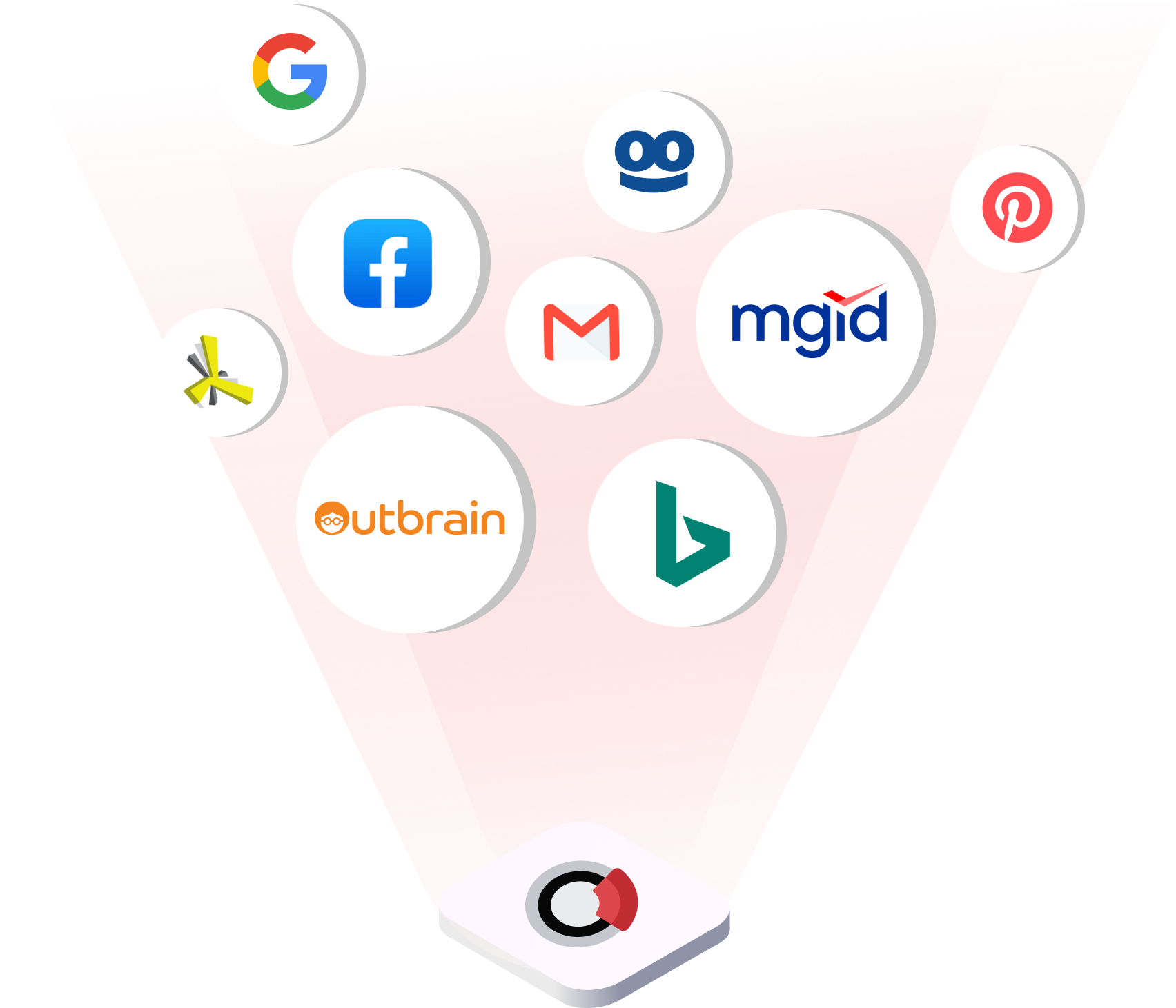
MyLead's partner ad tracker RedTrack groups this data with three features media buyers rely on most:
No-redirect tracking script — follows organic and paid traffic from sources that block redirect URLs, like Facebook and Google, into one clean report.
Facebook deep integration — sends conversion data straight back to Facebook, auto-updates ad cost every 60 minutes, and pauses campaigns that miss your KPIs; it also helps you avoid what gets you banned on Facebook.
A/B testing — tests pre-landers, landers, offers and banners at once, so you keep only the best performer; see our guide to A/B testing.
How do you use ad data to understand your customers?
To understand customers, you read the data trail from first impression to final action: which ad they saw, which channels touched them, and where they dropped off. Attribution models show how your sources work together to produce a sale, not just the last click. This stops you from wasting budget on ineffective targeting or non-converting creatives.
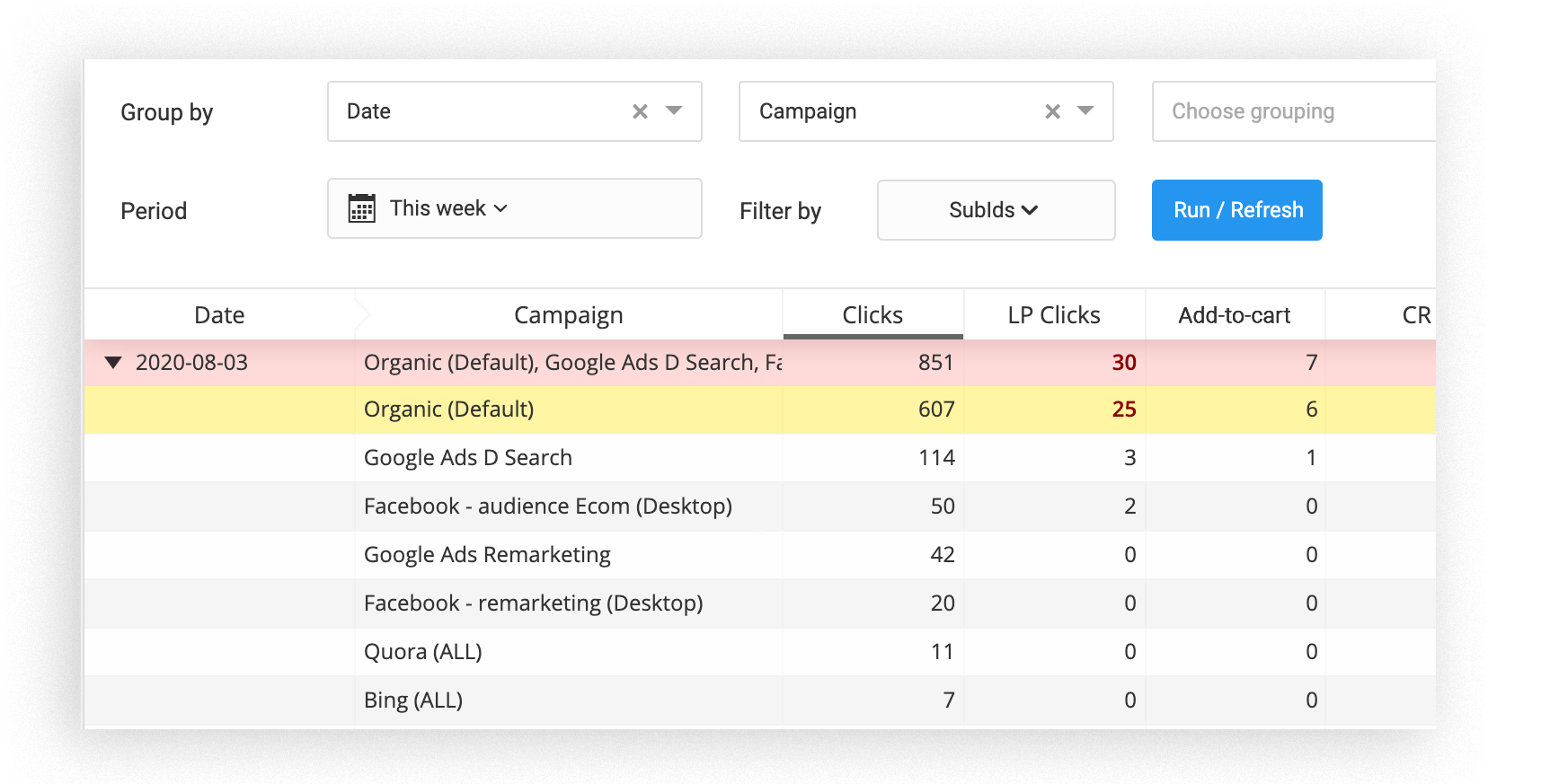
Four tracking habits sharpen your read on customer behaviour and recover lost revenue, including retargeting strategies for users who leave without converting:
Compare several attribution models to see which funnel steps and channels drive the most revenue together.
Check the loading speed of your landing and pre-landing pages to measure how many users you lose to slow pages.
Track post-conversion events to find reliable ways to upsell and retain existing customers.
Run A/B tests with enough data behind them to make optimization decisions you can trust.
Which verticals should you test for higher ROI in 2026?
Ad data lets you test new verticals safely because you measure performance before committing budget. After 2020's volatility, publishers moved from betting toward dating, insurance, e-commerce and nutra offers. For Q4 the strongest returns sit in seasonal niches — Thanksgiving, Black Friday and Christmas — where e-commerce, nutra and education campaigns convert best with the right creatives and targeting.
Don't scale on instinct: launch a small test, read the conversion data per source, then expand only the winners. Seasonal demand rewards fast movers, so prepare creatives and e-commerce affiliate programs before the traffic peaks.
How do you automate campaign optimization?
You automate optimization with rule-based triggers that act on your tracking data without manual checks. In RedTrack, auto-rules let you set KPIs per campaign; when a campaign, offer, placement or creative misses them, it pauses automatically and sends a notification. This removes routine monitoring and protects your budget from traffic that no longer performs.
Automation scales what your data already proves. Layer auto-rules on top of tested campaigns and you free hours for strategy instead of dashboards — see how to build smart optimization rules that scale winning campaigns. Create your free MyLead publisher account and connect a tracker to your first campaign today.
Key takeaways
Real ROI per source only becomes visible through an ad tracker, because platform dashboards report their own numbers instead of the full conversion path.
A no-redirect tracking script captures multi-channel traffic from Google, Facebook and email in a single report, with no conversions lost between sources.
Attribution models reveal how channels work together to produce a sale, so you stop crediting only the last click.
Auto-rules pause campaigns that miss your KPIs automatically, cutting wasted ad spend without constant manual monitoring.
Reliable real-time data replaces guesswork, letting you optimize creatives, targeting and budget on facts instead of assumptions.
FAQ
1. What is an ad tracker?
An ad tracker is a tool that records every click and conversion across your traffic sources and links them to a final action. It shows real ROI per campaign, independent of platform self-reporting.
2. Why do media buyers need real-time data?
Real-time data lets you spot failing campaigns and scale winners within hours, not days. Waiting on delayed reports means you keep paying for traffic that already stopped converting.
3. Can you track Facebook traffic without redirect links?
Yes. A no-redirect, cookieless tracking script follows Facebook traffic that bans redirect URLs, and deep integration sends conversion data back to Facebook for more accurate optimization.
4. What is attribution in media buying?
Attribution assigns credit for a conversion across the channels that influenced it. Using several attribution models shows which funnel steps and sources actually drive your revenue.
Summary
Ad data turns media buying from guesswork into a measurable process: it shows real ROI per source, recovers lost conversions through no-redirect tracking, and reveals the full customer journey with attribution models. Read your numbers in real time, automate the routine with auto-rules, and reinvest only in what the data proves works.
Have any questions? Feel free to reach us through our channels.