Blog / Tools
Offerwall in a Mobile Game or App: How to Monetize Effectively?
This article is updated regularly
Last update:
25 August 2025
An Offerwall in a mobile game is a rewarded monetization tool that lets players earn in-game currency by completing sponsored tasks instead of paying. MyLead's Offerwall monetizes non-paying users, increases retention and eCPM, and integrates directly into your homepage, in-game store or pop-up prompts where players need hard currency.
In this article you'll see a real case study of an RPG game that earned thousands of euros with the Offerwall, plus practical tips on placement, currency setup and campaign selection.
What you'll learn from this article:
how an Offerwall monetizes players who never spend real money,
which four benefits the Offerwall brings to mobile games and apps,
where to place the Offerwall and how to set up your in-game currency,
which campaigns convert best and how much a real MyLead partner earned.
What is an Offerwall in a mobile game and how does it work?
An Offerwall in a mobile game is a screen listing sponsored tasks — app installs, registrations, game levels or surveys — that players complete to receive in-game currency. It monetizes users who never buy with real money, turning their time into revenue for you. Each completed task pays a commission tracked automatically by MyLead.
Unlike standard ads, the Offerwall is opt-in — the player chooses to engage, so it feels far less intrusive. MyLead's Offerwall Rewards works in both mobile games and apps, and you decide where it appears and which rewards it grants.
What are the benefits of using an Offerwall in a mobile game?
The Offerwall delivers four core benefits: higher player retention, monetization of non-paying users, increased eCPM, and a non-intrusive alternative to annoying ads. Players who complete tasks reinvest rewards in your game and return more often, while you earn from an audience that would otherwise never generate revenue.
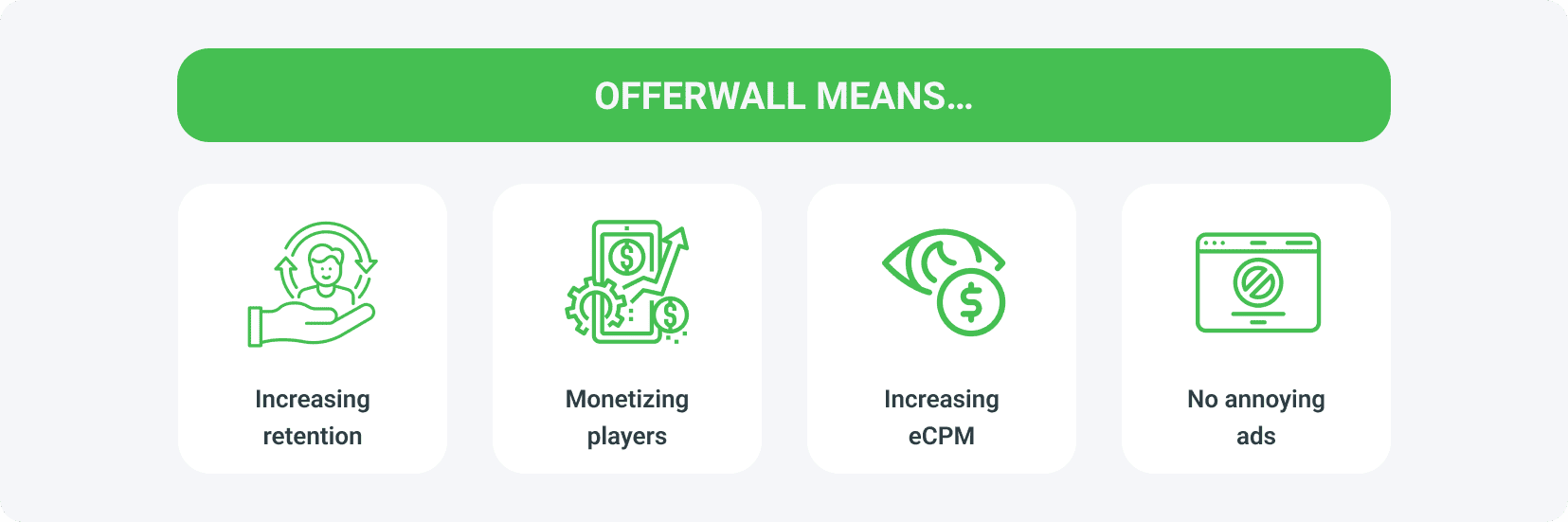
Increased retention — engaging tasks bring players back to the game, leading to up to 40% higher retention.
Monetization of non-paying players — earn from users who won't buy in-game currency but will spend time completing tasks.
Increased eCPM — the Offerwall can reach an eCPM of up to $1,500, generating high revenue for webmasters.
Alternative to annoying ads — rewards for interaction replace intrusive banners and keep players engaged.
Want the full picture? See the six benefits the Offerwall brings to mobile game developers, and separate real advantages from misconceptions in our guide to facts and myths about the Offerwall.
How did an RPG game monetize players with the Offerwall?
A MyLead partner placed the Offerwall in their fantasy RPG game, which uses two currencies: coins as soft currency and moonstones as hard currency. The Offerwall let players earn moonstones by completing tasks instead of buying them, adding a new revenue stream on top of in-app purchases and standard video ads.
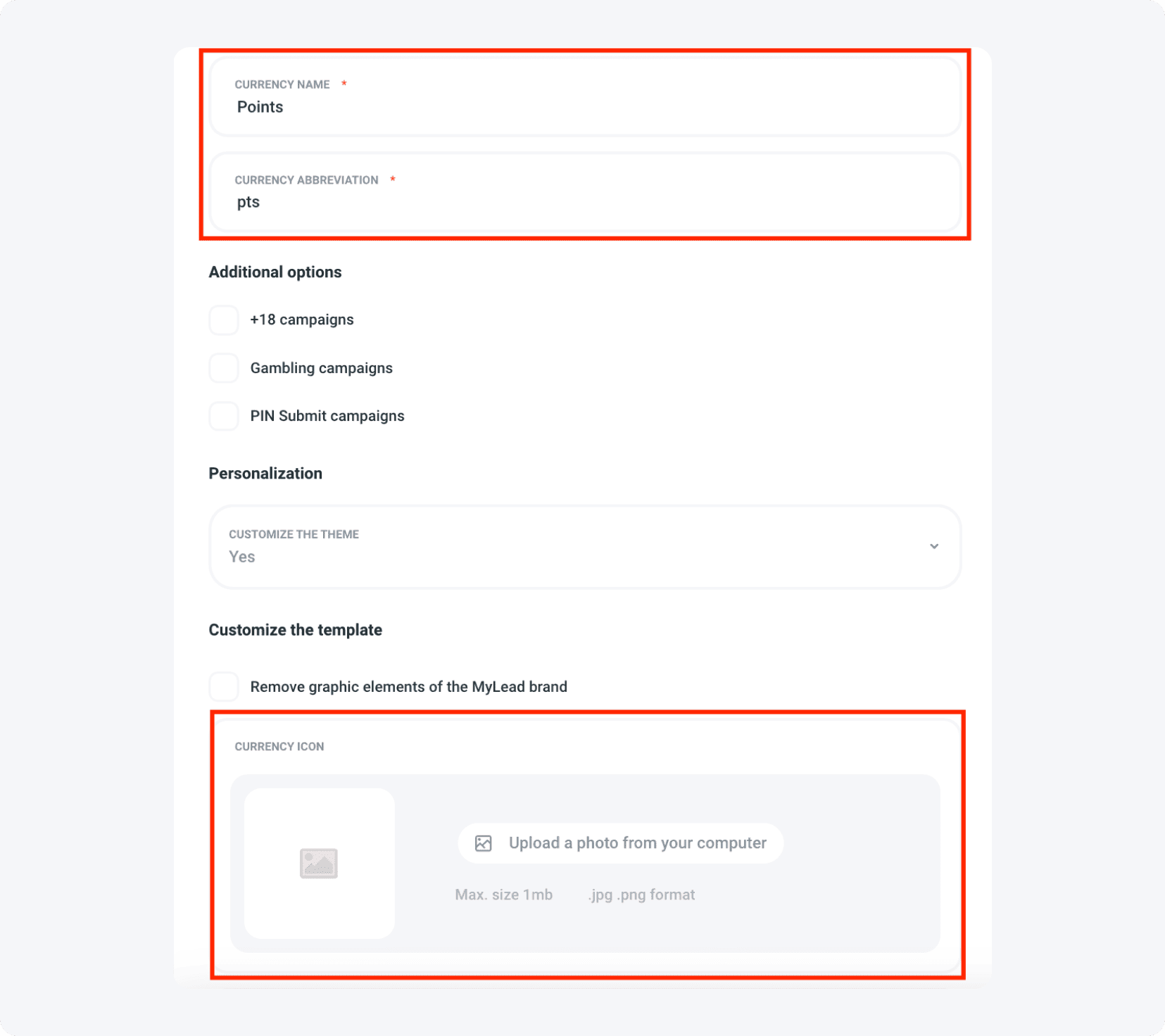
For the Offerwall to convert, the rewarded currency must be genuinely valuable and impossible to obtain by swapping another currency — if players could exchange coins for moonstones, conversion would collapse. MyLead lets you give the hard currency any name, abbreviation and logo to match your game.
Alongside periodic video ads, the partner's RPG already earned through in-app purchases: players bought crystals (moonstones) with real money for weapons, gear and skill upgrades. The Offerwall added a parallel channel for everyone who never pays — one of several ways to make money with mobile games and apps. It sits inside the crystal store, opened by a prominent "Free" button framed with crystals, plus in-game prompts that surface when a player needs hard currency to progress.
Where should you place the Offerwall in your app?
The Offerwall's placement determines how many players interact with it, so position it where engagement peaks: the homepage, the in-game store and pop-up prompts. The homepage reaches every user, the store captures players already seeking hard currency, and pop-ups remind players exactly when they run out of the currency they need.
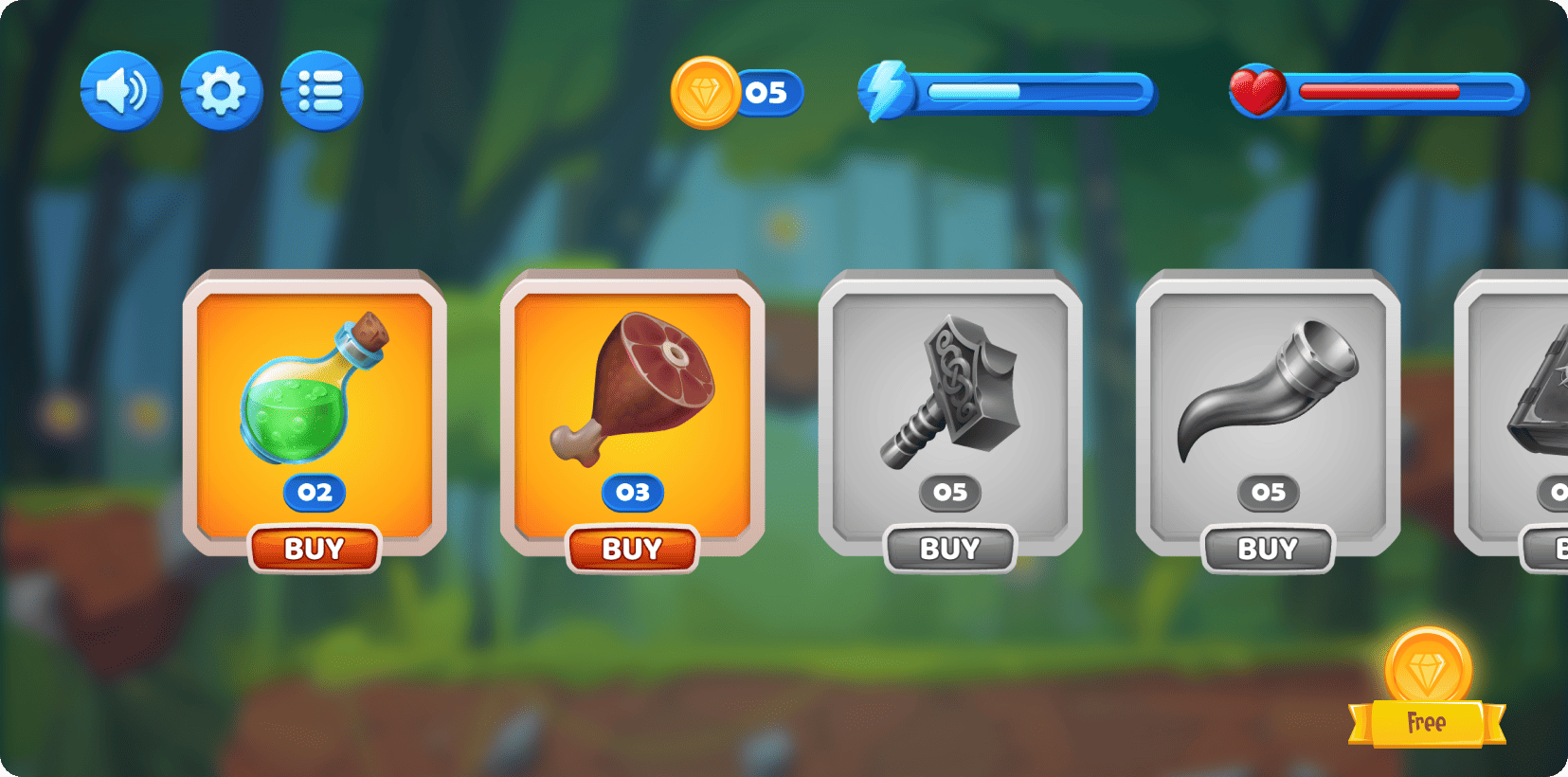
The wall should sit where players are most likely to interact with it. The best places for the Offerwall are:
Homepage — the first screen every user sees; not everyone browses deeper sections, but everyone reaches the homepage, so it captures the widest audience.
In-game store — where your most loyal players go to seek hard currency; they are ready to invest time instead of money, and either choice earns you revenue.
Pop-up windows — perfect reminders when a player lacks the currency to enter a location or continue a quest; the prompt suggests earning it through the Offerwall, and can also trigger when the hard-currency balance hits zero.
How do you customize the Offerwall's appearance?
MyLead lets you fully customize the Offerwall's appearance so it blends organically with your game's interface. You configure colors, layout and branding, and the wall opens directly inside the player's view — for example through a prominent "Free" button. Seamless visual integration drives more positive engagement than a wall that looks bolted on.
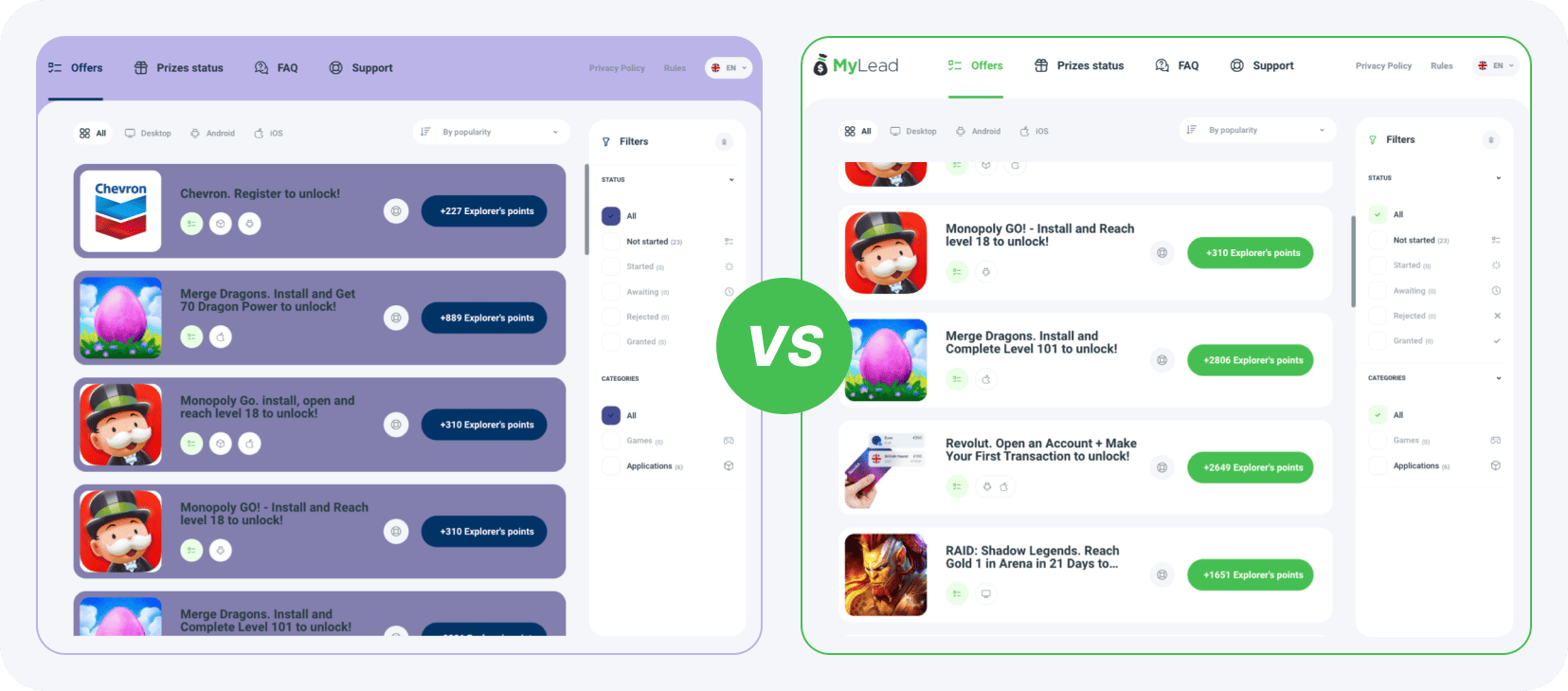
Successful integration makes the wall look native — a bolted-on wall hurts engagement, while an organic one lifts it. Check out how to configure MyLead's Offerwall in our step-by-step setup guide and match its colors and layout to your app.
Which campaigns convert best on the Offerwall?
The highest-converting Offerwall campaigns are CPI offers with simple installs and CPA offers where the target action is registration. Mobile and desktop games with a clear conversion point — such as reaching a set level — perform strongly, and you can add SOI or DOI sweepstakes where the player only submits an email address.
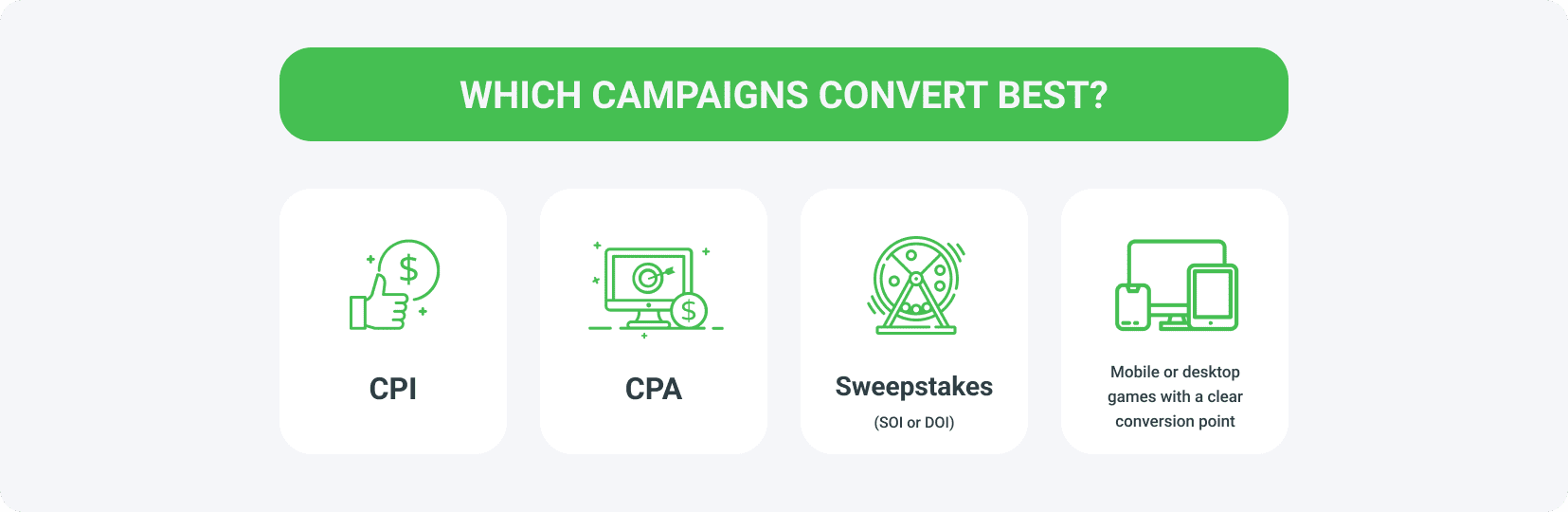
Our proprietary script selects campaigns automatically using parameters such as the end user's location, which directly affects promotion effectiveness. You can also pick offers manually for full flexibility, but we recommend automatic selection. See the full breakdown in the complete MyLead guide to Offerwall Rewards.
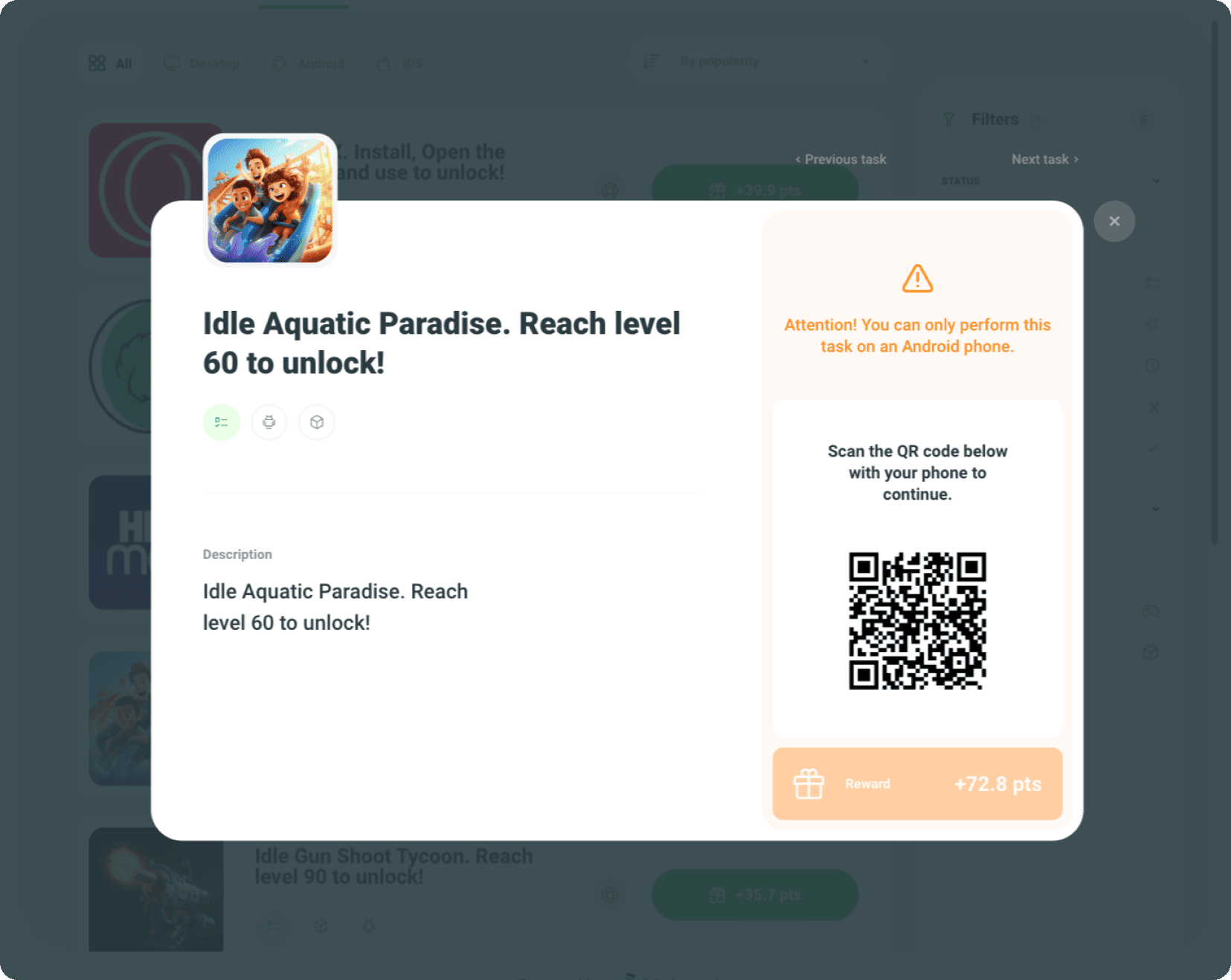
On this partner's wall, tasks come mainly from other games, mobile apps and browsers. One task asks players to install and play another game up to level 60, paying over 72 points.
A simpler task, such as installing a web browser, rewards the player with under 40 points.
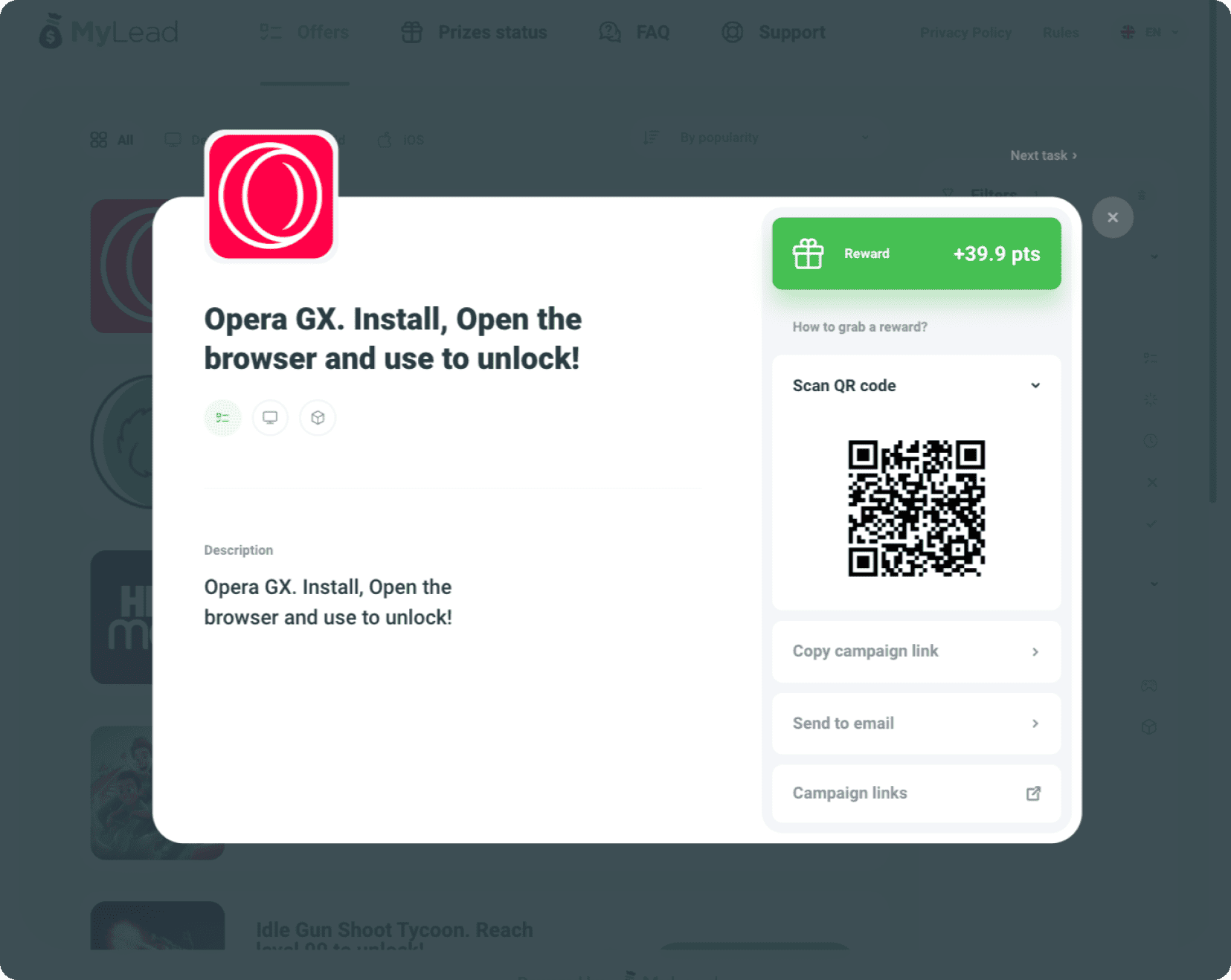
Tasks vary in difficulty and length, and the partner deliberately added as many affiliate programs as possible so every user finds something. New offers rotate automatically and display randomly through the algorithm, keeping the wall fresh and attractive.
How much can you earn with the Offerwall?
Earnings depend on your traffic volume, niche and how well the Offerwall is integrated. The MyLead partner from this case study earned $10,723 in three months from the Offerwall alone — individual results vary with scale, niche and traffic. Fresh tasks rotate automatically, keeping the wall attractive and revenue flowing.
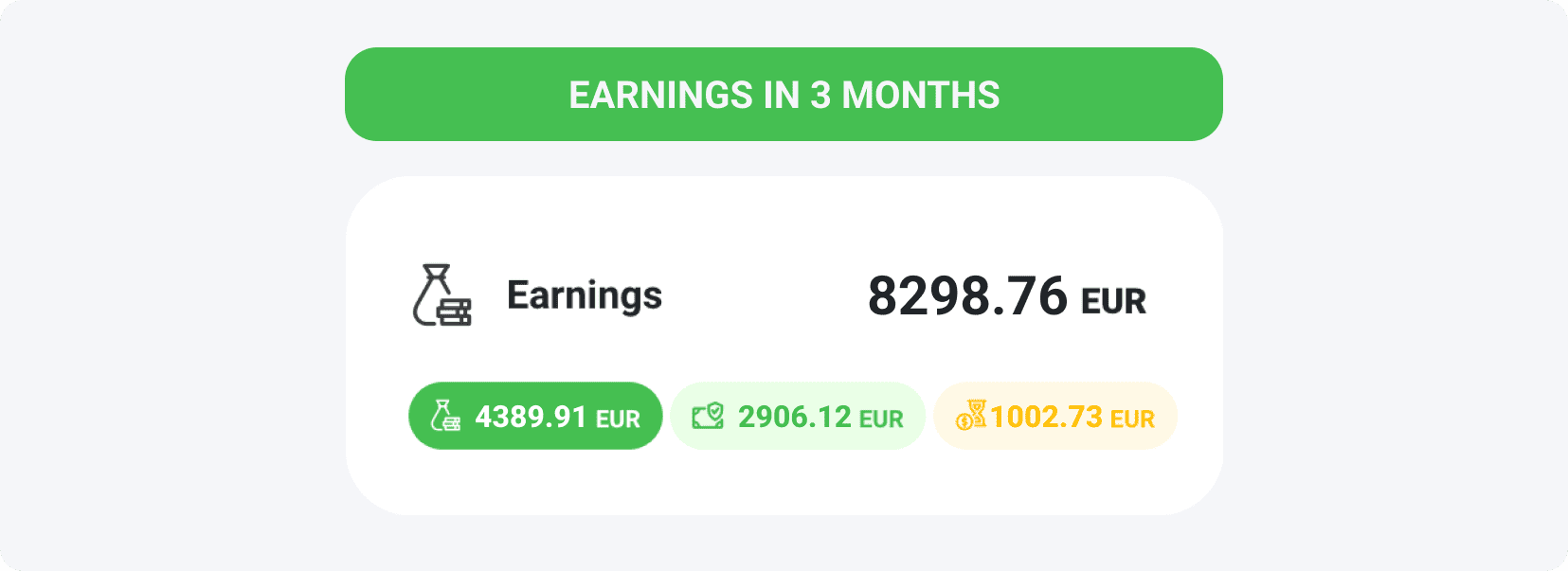
That result came from the Offerwall alone, layered on top of the game's existing in-app purchases and video ads. For another worked example of app monetization, see this Mobile Rewards case study — but remember every project's numbers depend on its own traffic, niche and integration, so individual results vary.
Check out how to configure MyLead's Offerwall and start monetizing your app.

Key takeaways
An Offerwall monetizes players who never spend real money by paying you a commission for each sponsored task they complete.
Placement decides results — the homepage, in-game store and pop-up prompts capture the most engagement.
The rewarded hard currency must be valuable and impossible to obtain by exchange, or conversion drops.
CPI installs and CPA registrations convert best, with SOI/DOI sweepstakes as easy add-ons.
One MyLead partner earned $10,723 in three months from the Offerwall alone — individual results vary with scale, niche and traffic.
FAQ
1. What is an Offerwall in a mobile game?
An Offerwall is a screen of sponsored tasks — installs, registrations or surveys — that players complete to earn in-game currency, generating commission for you instead of charging the player.
2. How much can you earn with a mobile game Offerwall?
Earnings depend on traffic, niche and integration. One MyLead partner earned $10,723 in three months from the Offerwall alone — individual results vary, so treat this as one example, not a guarantee.
3. Where should I place the Offerwall in my app?
Place it on the homepage for maximum reach, in the in-game store where players seek hard currency, and in pop-ups that appear when a player runs out of the currency they need.
4. Which campaigns convert best on the Offerwall?
CPI offers with simple installs and CPA offers requiring registration convert best, followed by games with a clear level-based conversion point and SOI/DOI email sweepstakes.
5. Can non-paying players really be monetized?
Yes. The Offerwall turns players who never buy in-game currency into revenue by rewarding the time they spend completing sponsored tasks, with MyLead tracking every conversion automatically.
Summary
Adding MyLead's Offerwall lets you monetize the large share of players who never pay real money, using rewarded tasks that fit naturally into your game. The MyLead partner in this case study earned $10,723 in three months from the Offerwall alone — individual results vary with scale, niche and traffic, but the model gives every app a new, low-friction revenue stream.
Have any questions? Feel free to reach us through our channels.