Blog / Affiliate marketing
Affiliate Marketing for Beginners: How to Start and Earn in 2026
This article is updated regularly
Last update:
25 August 2025
Affiliate marketing is a performance-based model where you earn a commission for promoting another company's products or services through a unique affiliate link. To start as a beginner, you create a free publisher account in an affiliate network such as MyLead, choose a campaign from the catalog, generate your tracking link, and promote it through a blog, social media, or email.
This guide explains how affiliate marketing works, which commission models pay you, how to pick profitable programs, and the promotion strategies and tools that turn traffic into commissions.
What you'll learn from this article:
how affiliate marketing works and who can really earn with it,
the five commission models MyLead uses and what each one pays for,
how to choose profitable niches and promote offers across multiple channels,
which MyLead tools and AI assistants speed up your first campaign.
What is affiliate marketing and how does it work?
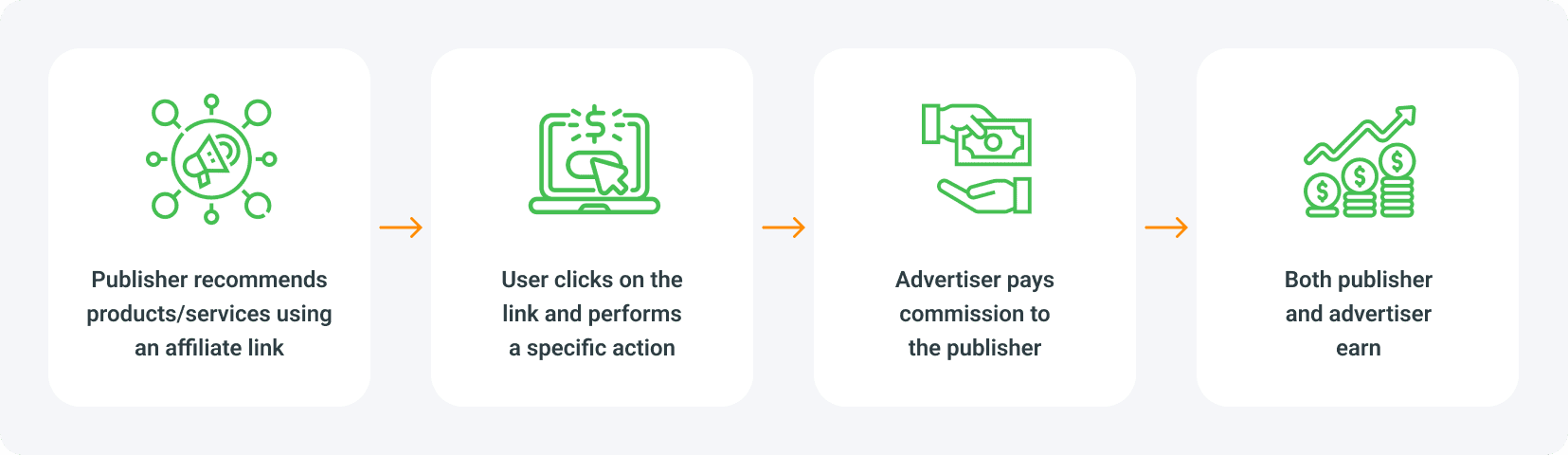
Affiliate marketing is a mechanism that lets publishers earn commissions for promoting the products or services of advertisers. The publisher shares a unique affiliate link, and every tracked action — a click, registration, or sale — generates a commission. An affiliate network like MyLead connects both sides, supplies the offers, tracks results, and handles payouts.
According to Rakuten/Forrester Research, 80% of brands run affiliate programs, and most advertisers spend roughly 10% of their marketing budget on them. The model is performance-based — you are paid for results, not impressions. For a fuller definition see what affiliate marketing is, and the latest affiliate marketing statistics confirm the industry keeps growing in 2026.
One key element is the unique affiliate identifier — your affiliate link — which records exactly which publisher drove each transaction. It is a fair, transparent model: the advertiser expands its reach, and you earn in proportion to the results your promotion delivers.
Who can earn with affiliate marketing?
Anyone can earn with affiliate marketing — it is not reserved for influencers. Success depends on your determination, creativity, and ability to promote offers to the right audience. Bloggers, content creators, and complete beginners all build income once they learn to use the available tools and affiliate programs effectively.
What is MyLead and why earn with this affiliate network?
MyLead is an affiliate network with over 100,000 publishers and access to thousands of campaigns across many niches. It makes earning online simple: you register for free, browse offers, generate links, and get paid from your commissions. MyLead suits both experienced marketers and complete beginners, with no startup fees required.
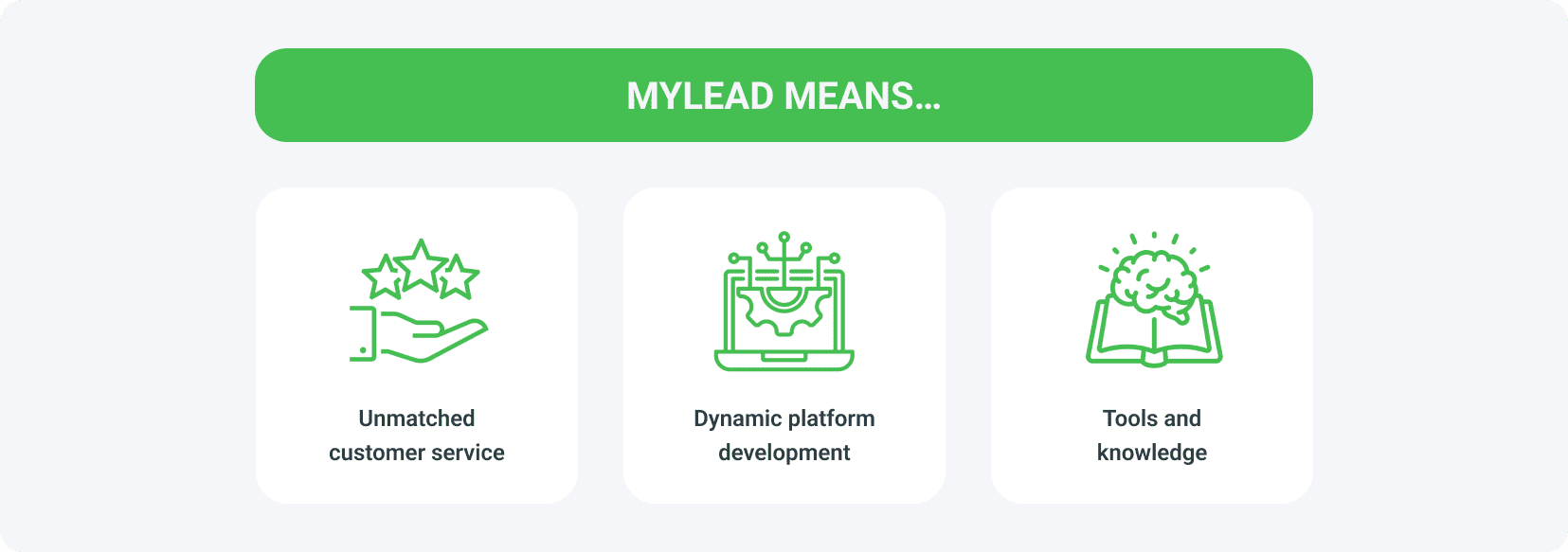
MyLead stands out with three things:
Top-notch support — a team that helps at every stage, whether you are a novice or an expert affiliate.
Dynamic platform development — constant updates that add the latest tools, technologies, and trends.
Tools and knowledge — free promotional tools plus an affiliate blog and video tutorials.
Join MyLead and create a free publisher account to unlock the full campaign catalog and start earning today.

By joining MyLead you become part of a community that offers earning opportunities, support, knowledge, and the tools to reach your goals.

What commission models does MyLead offer?
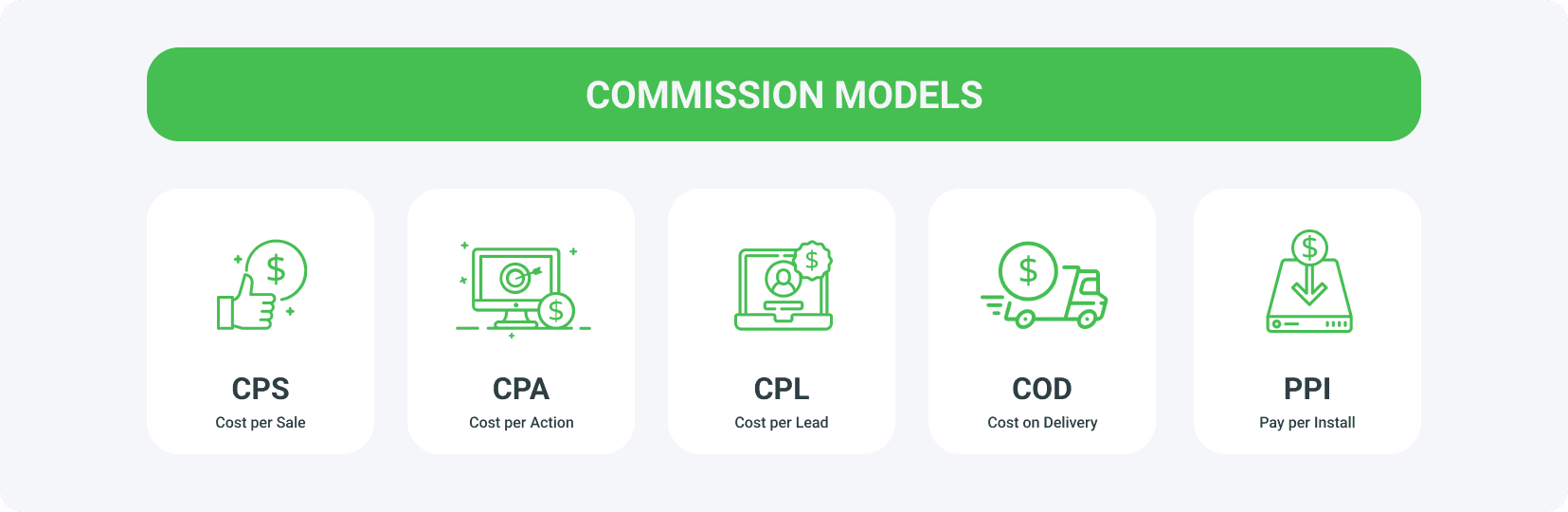
Commission models define what action triggers your payout. MyLead offers five models: CPS (cost per sale), CPA (cost per action), CPL (cost per lead), COD (cost on delivery), and PPI (pay per install). Each fits a different offer type, so your earnings always match a specific, measurable user action.
CPS – Cost per Sale — commission for each completed sale; your earnings are proportional to the offer's success. Typical category: e-commerce.
CPA – Cost per Action — the broadest model; you earn for actions such as form submissions, app downloads, newsletter sign-ups, or reaching a game level. Typical category: apps, platforms, and mobile games.
CPA itself splits into several rate types:
CPD — cost per download, a rate for downloading a file.
CPI — cost per install, a rate for installing a file.
CPL — cost per lead, a rate for a correctly filled contact form.
CPS — cost per sale, a rate for a sale made through your affiliate link.
CPR — cost per registration, a rate for each registration on a site, game, or portal.
CPM — cost per thousand, a rate for 1,000 views, clicks, or other actions.
CPC — cost per click, a rate per click on an affiliate link.
CPO — cost per order, a rate for the order regardless of purchase value.
CPL – Cost per Lead — commission when a user registers or signs up for a newsletter; ideal where collecting potential customers matters. Learn more about CPL in affiliate marketing. Typical category: training companies, information portals, comparison services.
COD – Cost on Delivery — commission for each successful cash-on-delivery transaction; common where users pay on receipt. Typical category: supplements, cosmetics.
PPI – Pay per Install — commission for each completed software or app install. Typical category: mobile apps, antivirus, graphic tools.
Publisher's glossary — key affiliate marketing terms
The publisher's glossary collects the core affiliate marketing terms you need before launching your first campaign. Mastering this vocabulary — from conversion and lead to reflink and ROI — helps you read offer conditions, compare networks, and follow the rest of this guide without confusion. See the full affiliate marketing glossary for more.
Cloaking — hiding partner links or pages, for example by serving search-engine robots a different page version.
CTR — Click-Through Ratio; the ratio of users clicking a link to all users who saw it.
Conversion — when a user performs the desired action on the landing page, such as registering or downloading a file.
Fraud — commission obtained against the rules of a given partner program.
Incentive traffic — the opposite of natural traffic; offering money or goods in exchange for an action, forbidden in most programs.
Landing page — an advertising page designed for the highest possible conversion.
Lead — a person who left their data or correctly filled in the contact form on a sales page.
Niche — a market segment defined by specific needs of potential customers.
Passive income — income that does not require active work, lasting after your own activity ends.
Referral — a person registered from your referral link.
Reflink — a unique affiliate link used to promote goods, services, or recruit referrals.
ROI — Return on Investment; the percentage return, calculated as (revenue − cost) / cost × 100%.
SEO — Search Engine Optimization; processes that improve a website's position in search results.
Traffic source — the platform or activity through which customers find your offer; free (social media) or paid (search ads).
Referrals system — a system that lets you recommend a partner program and recruit new partners for a percentage commission.
UU — Unique User; a single distinct visitor to a website.
How do you choose profitable affiliate offers?
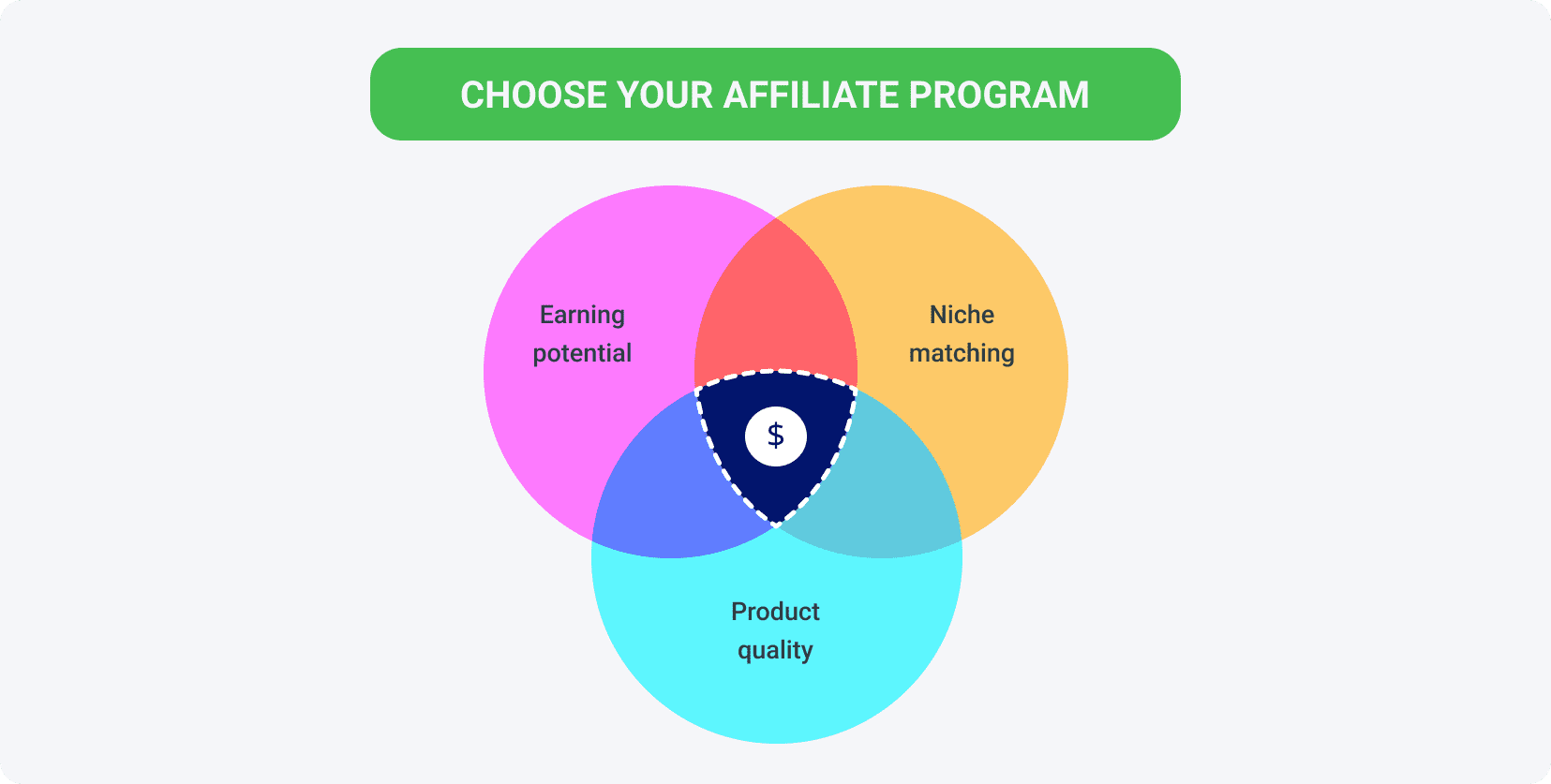
Choosing profitable offers means matching campaigns to your audience and picking a clear commission model. Analyze three things before promoting: define your niche, check commission rates, and assess product or service quality. Offers aligned with your audience's interests and backed by a trustworthy product convert far better and build loyalty.
Define your niche — focus on an industry that fits your interests, so promoting it feels authentic.
Check commission rates — higher payouts often demand harder actions; finance and banking offers pay top rates for opening an account or taking a loan.
Analyze product or service quality — a valuable offer builds trust, lifting conversion and customer loyalty.
Not sure where to register? Compare options in our guide on how to choose the best affiliate network.
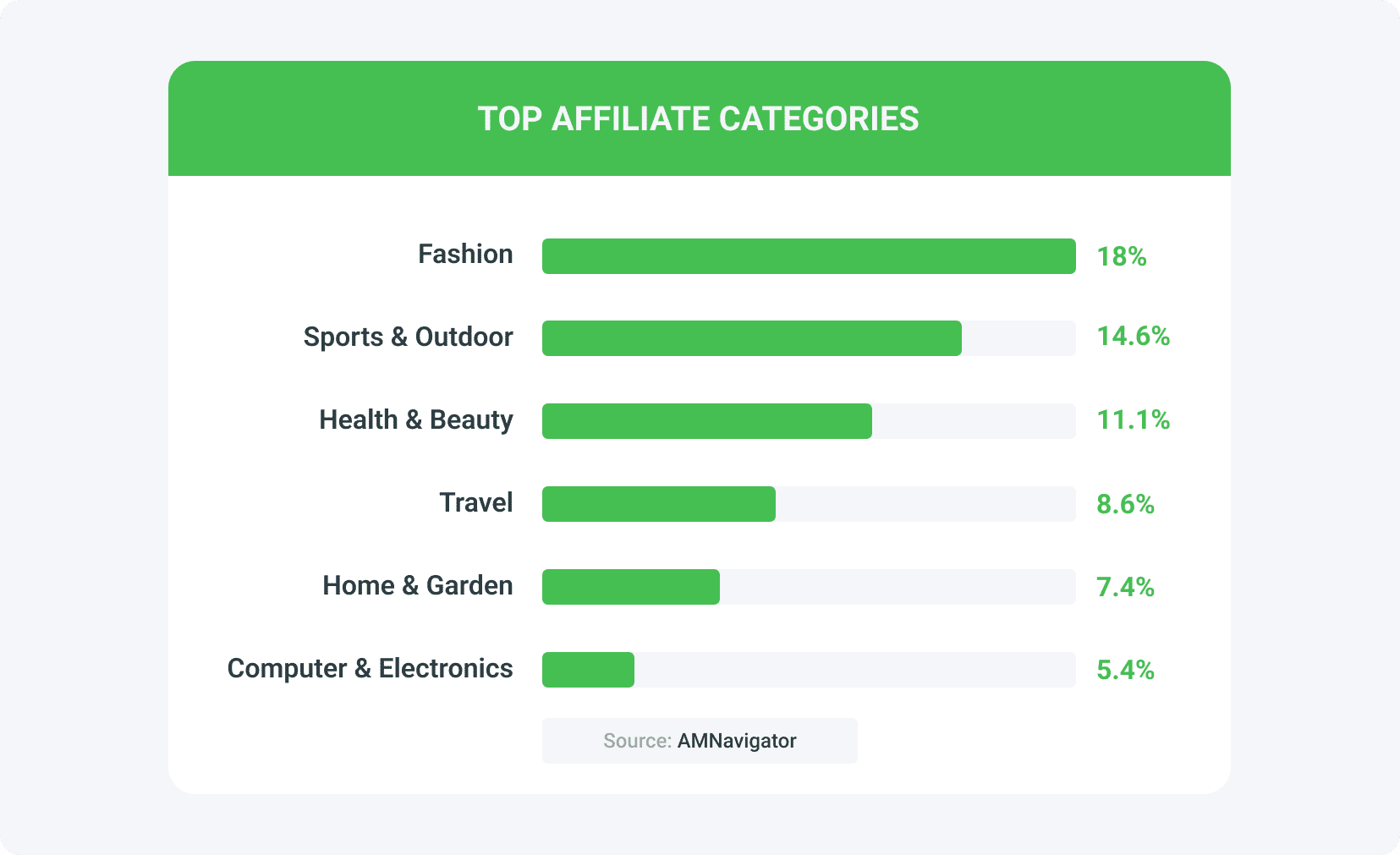
Which categories pay best? Almost 20% of all affiliate programs belong to the fashion industry — clothing, footwear, accessories, and more. However, the health and wellness niche is the most lucrative, with a market value exceeding $5.5 trillion across fitness, supplements, healthcare, and organic food.
How to promote affiliate programs?
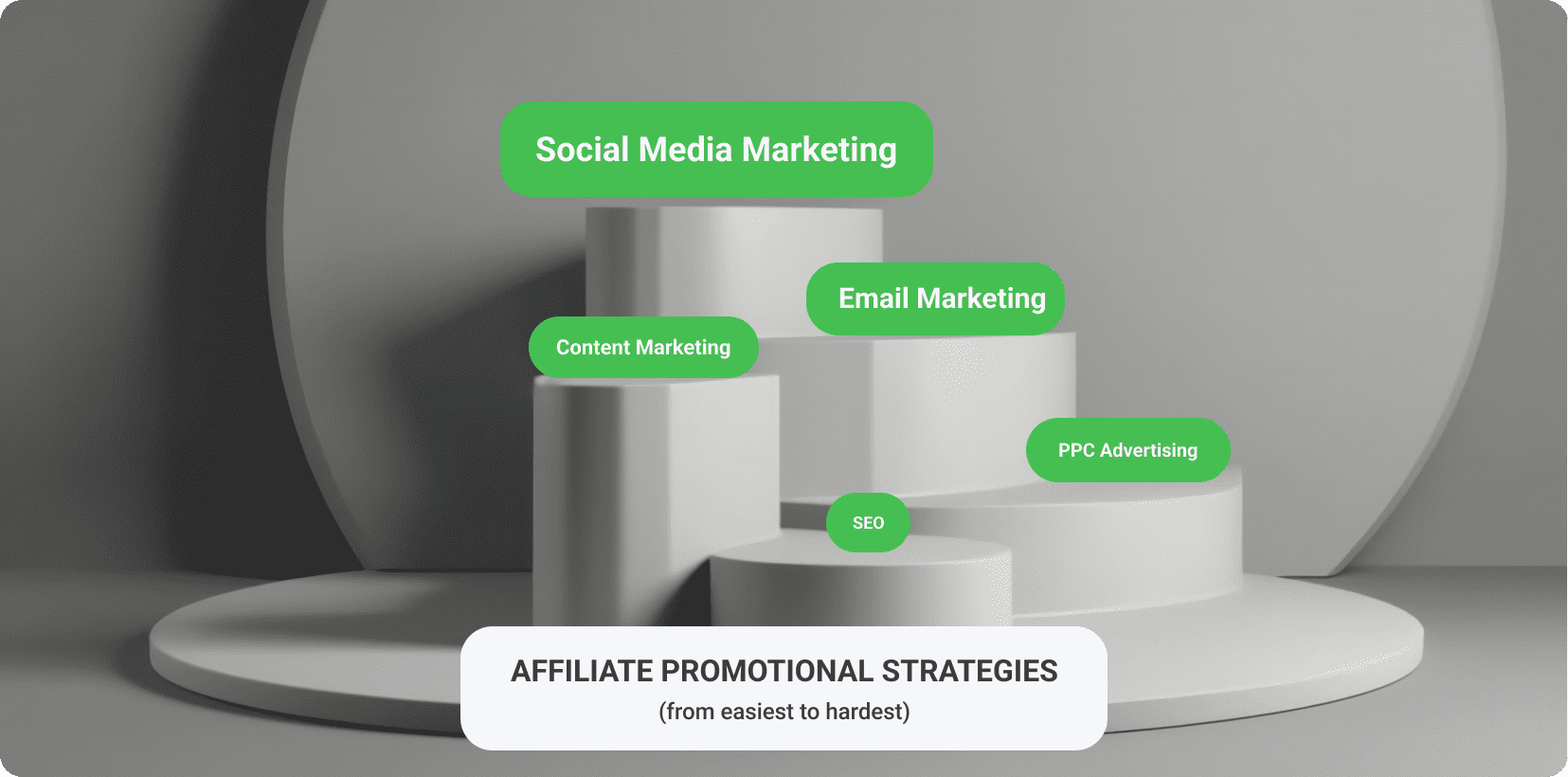
Promoting affiliate programs means driving targeted traffic to your links through proven channels: social media, content marketing, SEO, PPC ads, and email. No single strategy fits everyone — the best approach matches your strengths and your audience. Experiment, measure each channel's performance, and double down on what converts for you.
How does social media marketing work for affiliates?
Social media marketing uses platforms like Facebook, Instagram, and X to promote offers to an engaged audience. Over 67% of affiliates use it as a traffic source. You create engaging content, share promotions, and interact directly with followers. Beginners should focus on one or two platforms first to build a loyal following.
Choosing the right platforms — research your audience and match niche to platform; visual niches thrive on Instagram, professional services on LinkedIn.
Content creation — publish visually appealing, informative posts like reviews, tutorials, and user-generated content.
Interacting with the audience — respond to comments and messages and run interactive campaigns to build community.
Graphics and visual assets — use tools like Canva or Adobe Spark and royalty-free libraries for professional visuals.
Case study: promoting a fitness app, you could post workout routines, healthy recipes, and progress stories on Instagram, use relevant hashtags, and collaborate with fitness influencers to amplify reach. See more on how to earn money on social media.
What is content marketing in affiliate marketing?
Content marketing creates valuable blog posts, articles, and videos that attract and engage an audience while promoting offers naturally. It ranks third among affiliate traffic sources, used by 65% of affiliates. Quality content builds credibility and trust, turning readers into buyers when you embed affiliate links where they add genuine value.
Understanding the target audience — research demographics, needs, and pain points so content resonates.
Creating high-quality content — well-researched posts, reviews, videos, and podcasts that build trust.
Promoting across channels — share on social media, newsletters, communities, and through cross-promotion.
Case study: a travel blog sharing packing tips, destination guides, and product reviews can embed affiliate links strategically to drive qualified buyers. For a deeper walkthrough, read how to make money blogging.
How does SEO help affiliate marketers?
SEO optimizes your content to rank higher in search results and deliver free, recurring traffic. About 70% of affiliate publishers rely on it because organic visitors cost nothing per click. SEO takes time to produce results, so patience matters — but the long-term payoff in steady traffic is worth the wait.
Keyword optimization — research and place relevant keywords in titles, headings, and meta descriptions.
Technical optimization — improve site structure, page speed, mobile-friendliness, and internal linking.
Link building — earn high-quality backlinks from reputable sites in your niche.
Follow our SEO checklist for engaging content to rank affiliate pages faster.
What is PPC advertising in affiliate marketing?
PPC (pay-per-click) advertising places paid ads on search engines and social platforms, charging you a fee each time someone clicks. Almost 35% of affiliates use it. PPC lets you target audiences precisely and scale visibility quickly, but it requires budget control and constant optimization to stay profitable.
Precision targeting — bid on relevant keywords or audience profiles to reach interested users.
Flexible budgeting — set daily or monthly limits and control your cost per click.
Performance tracking — monitor CTR, conversion rate, CPC, and ROI in real time.
Dynamic optimization — adjust bids, creatives, and targeting based on performance insights.
How does email marketing work for affiliates?
Email marketing builds a subscriber base and nurtures it with personalized content, promotions, and updates sent straight to the inbox. About 23% of affiliate marketers use it as a primary traffic source. In the EU you must follow GDPR — collect explicit consent, offer easy unsubscribes, and protect subscriber data.
Subscriber base building — grow your list with incentives like exclusive content, discounts, or freebies.
Segmentation and personalization — split your list by demographics or behavior and send tailored content.
Creating compelling email campaigns — craft strong subject lines, clean templates, and valuable content.
Start with our guide on how to build an email list for affiliate marketing.
What other promotion methods are profitable?
Beyond the core channels, several niche methods deliver strong results: dating profiles, messaging chatbots, and niche forums. Each reaches a highly targeted audience that mainstream channels miss. Used alongside social media or content marketing, these methods expand your reach and attract qualified leads for specific verticals.
Dating profiles
Dating profiles let you attract users to promoted dating apps or sites by creating an appealing profile and engaging people on platforms like Snapchat or X. This method works best combined with social media marketing, helping you reach a broader audience and drive new sign-ups to the dating platform you promote.
Communicators and chatbots
Chatbots on Messenger, Telegram, or WhatsApp let you engage users automatically and recommend relevant offers. A fitness affiliate, for example, can build a bot that suggests workouts and embeds affiliate links in its replies. Automated, personalized conversations drive conversions around the clock without manual effort on every message.
Niche forums and communities
Niche forums and online communities give you access to a highly targeted, engaged audience. By joining discussions, answering questions, and sharing genuine insights, you build credibility while subtly promoting offers. A tech affiliate active in smartphone forums, for instance, can recommend devices with affiliate links and attract qualified, ready-to-buy leads.
What affiliate tools does MyLead offer?
MyLead gives every publisher a set of free affiliate tools that optimize promotion and increase earnings. The core toolkit includes Offerwall Rewards for monetizing engagement, HideLink for masking and protecting links, Smartlink for automatic offer matching, and Content Locker for gating content behind paid actions. Each tool targets a different stage of your funnel.
Offerwall Rewards
Offerwall Rewards displays a wall of offers and tasks that users complete in exchange for in-app currency you define. Around 79% of users complete offerwall tasks every week, and 41% use them daily. It monetizes even non-buying visitors, and publishers who add the Offerwall see earnings rise by roughly 20-30% on average.
See how to set it up in our guide on Offerwall Rewards from MyLead.

HideLink — link masking system
HideLink is MyLead's proprietary link-masking system (cloaker). It hides the real destination, turning long, unattractive URLs into short, clickable links — ideal for social media. It also adds a safe page: bots stay on a neutral landing page while real users are redirected to your offer, extending your links' lifespan.
Smartlink — automatic offer matching
Smartlink automatically matches the best offer to each visitor, removing the need to select campaigns manually for different audiences. It analyzes data such as location and device to serve the most relevant, personalized offer in real time. This maximizes conversions by adapting to every user's individual preferences. Learn what a Smartlink is.
Content Locker — gating content for actions
Content Locker restricts access to content until a user completes a required action. MyLead offers four types, each gating content — an article, file, or reward — behind a paid action, so you earn a commission every time a visitor unlocks it. Explore MyLead Content Lockers in detail.
CPA Locker — blocks content until a paid action (purchase, registration, form); you earn a commission when the user completes it.
Captcha Locker — resembles a reCAPTCHA, but instead of selecting images the user completes at least one offer from the list.
File Locker — blocks a file download until the user completes at least one task; then the file becomes available.
Mobile Rewards — gives users points for completed tasks, redeemable for prizes; works on mobile devices only.
How do you track conversion rate?

Conversion rate (CR) measures the share of visits that turn into completed actions, and it is the main indicator of traffic quality. There is no universal way to count a "visit", so the same campaign can show different CR across networks. Always measure CR with consistent external statistics for reliable comparison.
The formula uses three values:
CR — the conversion factor.
A — the number of people who performed the action.
C — the number of people who clicked the ad.
Conversion is the percentage ratio of generated actions (leads) to site visits. If you drive 100 visits and obtain 10 leads, your conversion rate is 10% (10/100 × 100%). The number of leads is exact; the difference comes from how each network defines a "visit", which is why external measurement matters.
What mistakes do beginner publishers make?
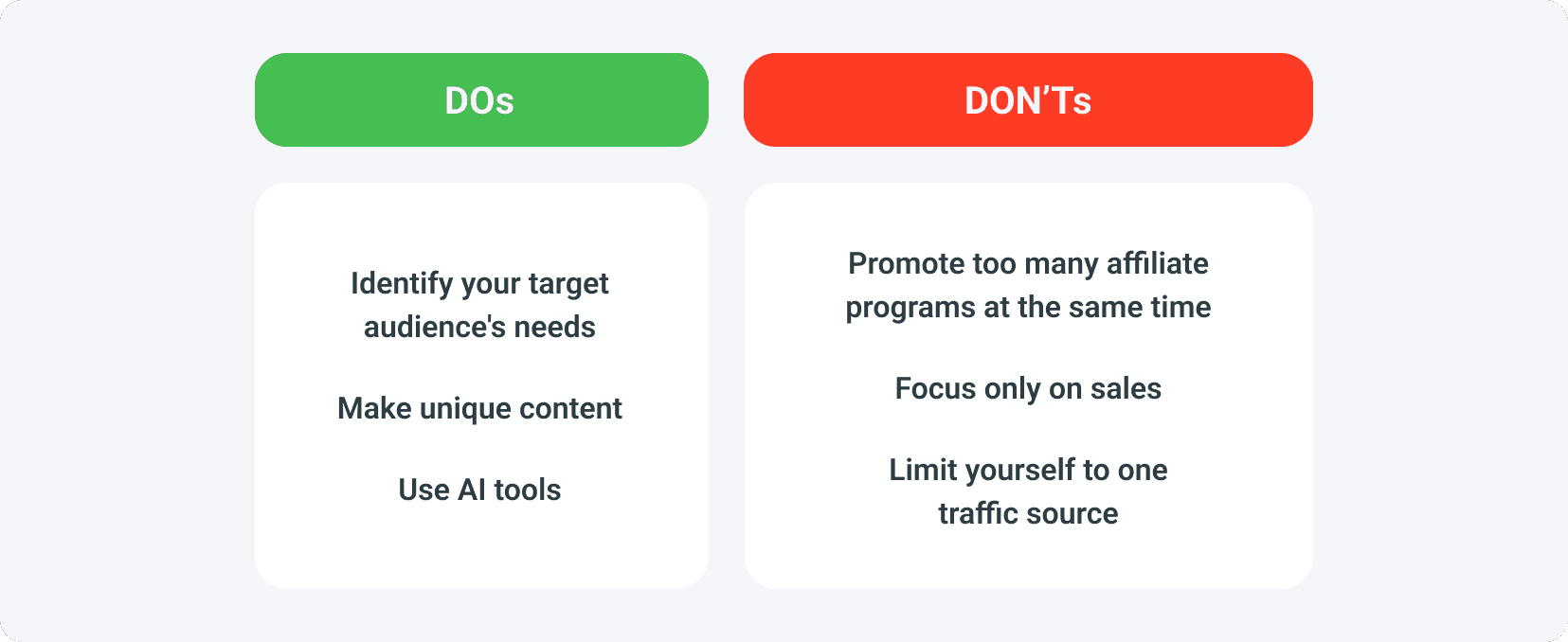
Beginner publishers lose time and money on a handful of avoidable mistakes: promoting too many programs at once, chasing sales instead of building trust, ignoring their audience's real needs, relying on a single traffic source, publishing generic content, and skipping AI tools. Avoiding these accelerates your first profitable campaign.
Promoting multiple programs at once — focus on one or two offers you know well; it is easier to start with a product you understand.
Focusing only on sales — a sale is the last funnel step; build trust first with credible, scannable descriptions, because users scan rather than read.
Not identifying your audience's needs — promote only what genuinely solves your readers' problems.
Limiting yourself to one traffic source — top earners test paid ads, YouTube, Facebook, Instagram, and forums, then analyze the results.
Content that doesn't stand out — clichés hurt both conversions and SEO; unique content ranks in Google.
Not using AI tools — 79.3% of affiliate marketers already use AI-driven content creation to stay ahead.
Useful AI tools for novice publishers include:
ChatGPT — generates conversational blog posts, social captions, and newsletters, and proofreads your content.
Copy.ai — beats writer's block with quick product descriptions, ad copy, and headlines.
Writesonic — produces SEO-friendly blog posts, Facebook and Google ads, and Shopify descriptions.
PhotoAi.com — generates AI visuals for social posts, blog headers, and promo materials.
Rytr — a writing assistant for sales pages, product descriptions, and marketing copy.
Colossyan — creates AI training and marketing videos at a fraction of traditional cost.
For a fuller list, read 10 mistakes to avoid in affiliate marketing.
How do you get started with MyLead?
Getting started with MyLead takes minutes: register a free account with basic personal data, then access the dashboard and thousands of affiliate offers. Before joining any program, add your traffic source so conversions track correctly. Then browse offers, pick those that fit your audience, and generate your first link.
Before joining a program, remember to add your traffic source — it is required for correct tracking. Our short video walks you through the process step by step.
Can you do affiliate marketing on your own?
Yes — affiliate marketing is not black magic, and anyone can do it. MyLead still supports you with experienced mentors and dedicated affiliate managers who help with campaign optimization, technical issues, and new promotion ideas. An active community lets you share insights and learn from other publishers, so you never work alone.
Key takeaways
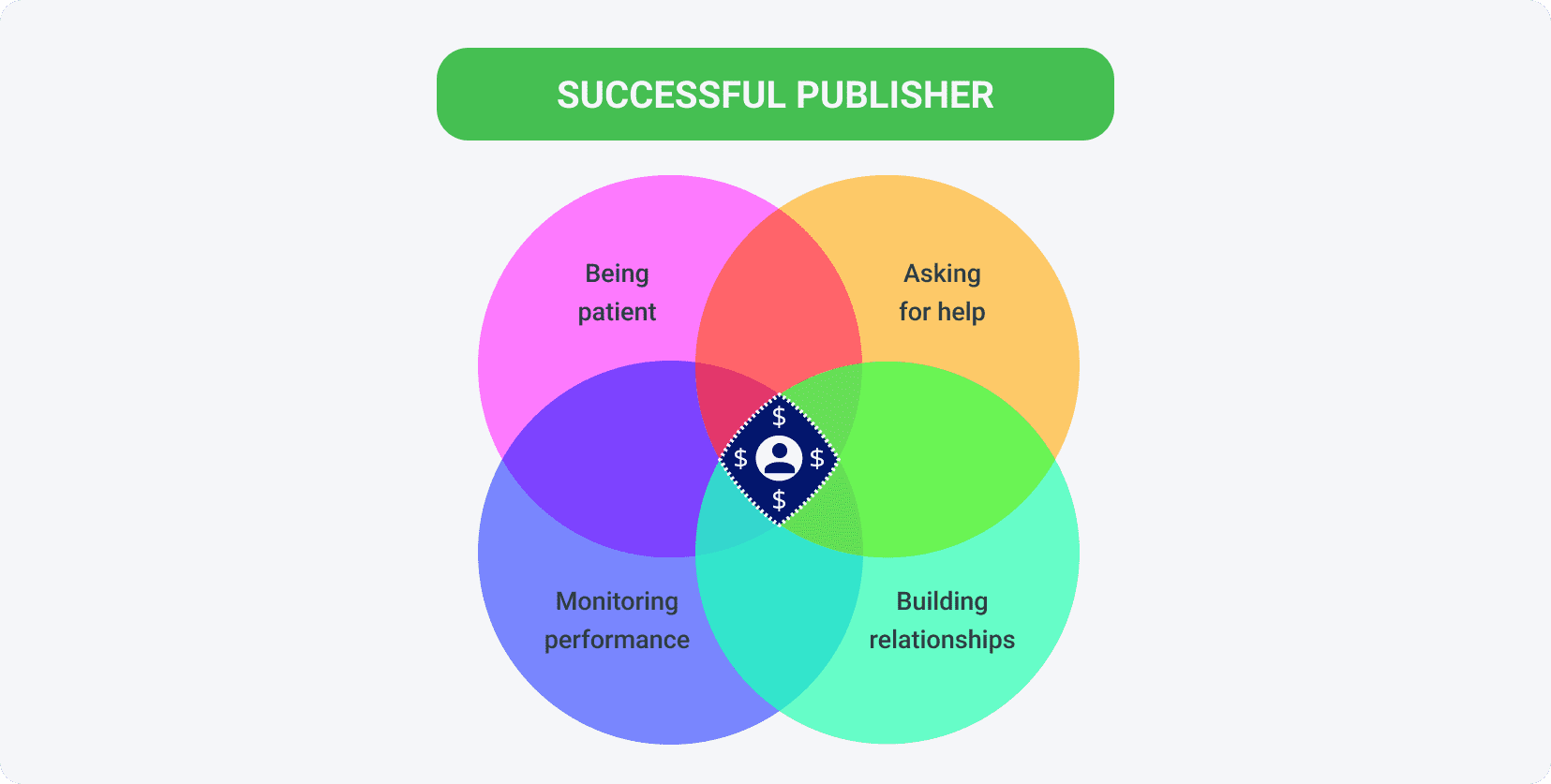
Understanding the fundamentals of affiliate marketing — promotional strategies and commission models — is the foundation of every publisher's success.
Combining channels like social media, content marketing, SEO, and email reaches and engages a wider audience than any single source.
Building trust and credibility with valuable content and honest recommendations drives long-term affiliate income.
Continuous learning, testing, and optimization keep you aligned with shifting trends and consumer behavior.
MyLead is free for publishers — you pay nothing to register and earn only from your commissions.
With MyLead's support team, mentors, and free tools, you can launch your first campaign without prior experience.
FAQ
1. Is MyLead free for beginners?
Yes. Registration, the campaign catalog, and all tools — Content Locker, Smartlink, and HideLink — are free. You pay nothing upfront and earn only from commissions on the actions you generate.
2. How much can a beginner affiliate earn?
Earnings depend on your niche, traffic, and effort. Beginners often start with modest commissions, while experienced publishers with steady traffic scale to thousands per month and top performers reach far higher.
3. Which commission model is best for beginners?
CPL and CPA usually convert easiest because the required action — a registration or form submission — is simpler than a purchase. Start there, then test CPS and PPI as your traffic grows.
4. How long before I see my first commission?
It varies by traffic source: paid ads can deliver conversions within days, while SEO takes weeks or months to build organic traffic. Consistent promotion and a properly tracked link speed up your first result.
5. Do I need a website to start?
No. You can promote affiliate links through social media, email, forums, or chatbots. A website or blog helps with SEO and long-term traffic, but it is not required to earn your first commission.
Summary
Affiliate marketing lets you earn commissions by promoting other companies' products through a unique link, and MyLead makes it accessible to beginners for free. Choose a profitable niche, pick the right commission model, promote across channels, track your conversion rate, and use MyLead's free tools and support to turn your first campaign into steady income.
Have any questions? Feel free to reach us through our channels.